
Intech Blog
Does Minnesota Code Require a Whole-Home Surge Protector?
Yes. Minnesota's adopted electrical code has required a surge protective device at the electrical service for most homes since theNational Electrical Code cycle, and that requirement carried forward through theedition and into theedition the state just adopted. If you're getting a new service or a panel upgrade, the code requires the SPD to go in at the same time, whether you ask for it or not.
The rule lives in NEC Section 230.67, and Minnesota's Board of Electricity doesn't amend the national code, it just adopts it edition by edition. The state moved to theNEC in November 2020, then to theNEC on July 1, 2023, and theedition became effective statewide on August 17, 2026. Minnesota's own code guidance confirms that surge protection under 230.67 is still required for residential services and panelboards under the current edition, with an exception that lets the device sit at the first downstream feeder panel instead of right at the meter.
A lot of homeowners hear "surge protector" and picture a power strip under the desk. That's not what this is. A power strip is a Typedevice, good for a last line of defense on a computer or TV, but it does nothing for your furnace control board, your sump pump, or the microprocessor inside an AFCI breaker. The code-required device is a Typeor TypeSPD mounted in or next to the panel, protecting everything downstream at once.
What the code actually requires
Article 230.67 says all services supplying dwelling units have to be provided with an SPD, and it has to be Typeor Type 2, installed as part of the service equipment or immediately adjacent to it. Thecycle expanded that further, adding feeders under Section 215.18, which means even a subpanel installation can trigger the requirement if it's feeding circuits in the dwelling. St. Paul's own building bulletin spells out that those devices need a nominal discharge current rating of at least 10kA.
Here's the part that surprises people: it's not just new construction. The requirement applies whenever existing service equipment gets replaced. So if your 1980s panel finally needs to come out, the SPD isn't optional add-on pricing anymore, it's part of doing the job to code.
Lightning doesn't need a direct hit
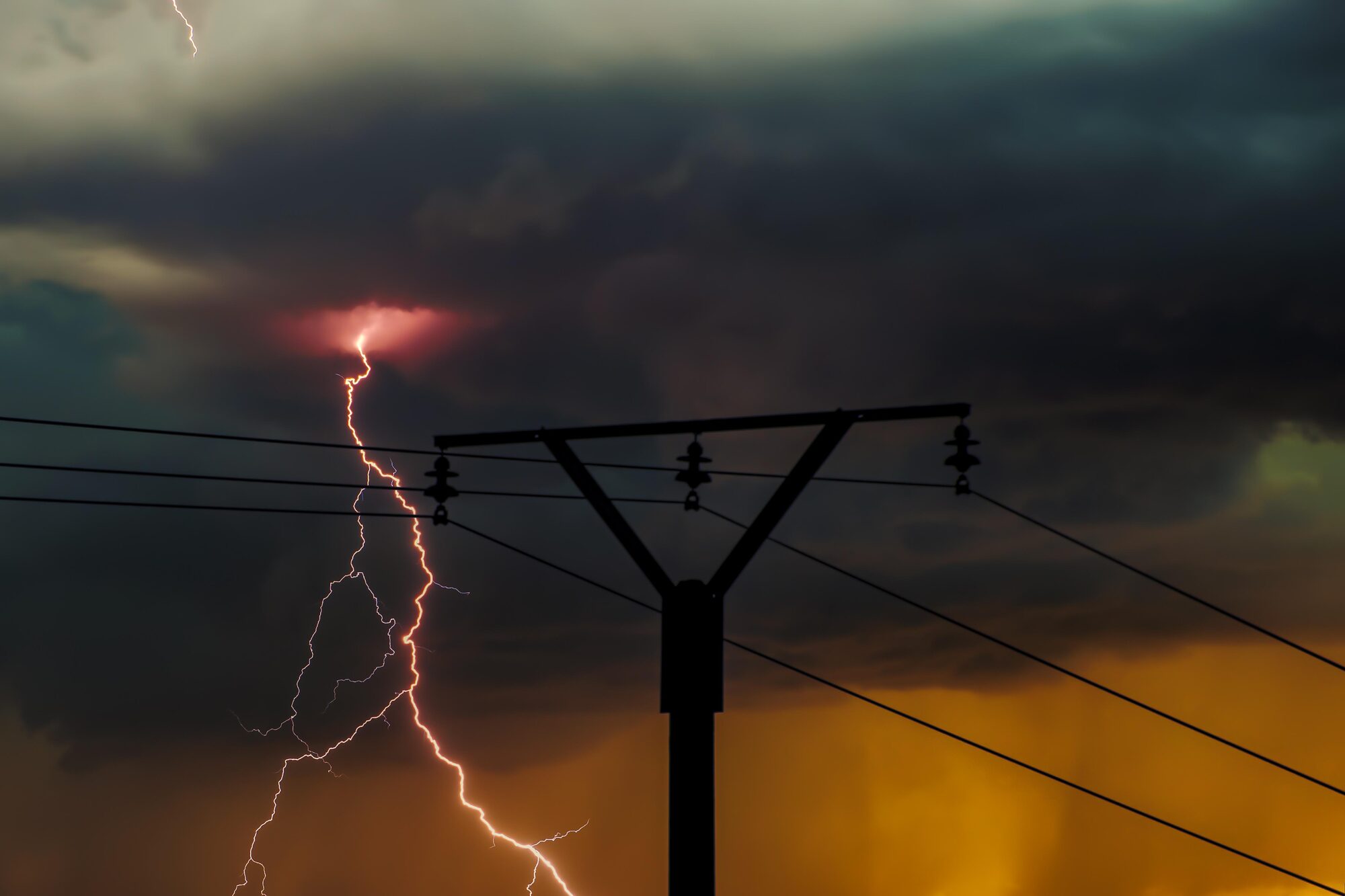
Most surge damage people blame on lightning never involved a direct strike on the house. A strike to a nearby tree, a utility pole, or even a transformer a few blocks away can send a voltage transient racing down the line and into your service entrance. The energy doesn't have to touch your roof to fry a control board.
Minnesota sits solidly in the middle of the pack nationally for cloud-to-ground lightning activity, and the Insurance Information Institute's most recent data shows just how expensive these events have gotten. In 2025, lightning-caused homeowners insurance claims rose to nearly 62,000 nationally, with total payouts of one point six five billion dollars and an average cost per claim of twenty-six thousand six hundred sixteen dollars. That average cost reflects what a single bad surge can actually do once it reaches a panel full of sensitive electronics.
Storms aren't even the main source
Grid switching causes more surge events than most homeowners realize. Every time a utility clears a fault, restores power after an outage, or a large motor somewhere on your circuit kicks on and off, it creates a transient. Running a portable generator without the right transfer equipment during an outage adds another risk on top of that, since improper connections can backfeed voltage in ways that stress equipment on both ends of the line.
None of that needs a thunderstorm. It happens on clear days, which is why a whole-home SPD earns its keep year-round, not just during severe weather season.
What a whole-home SPD is actually protecting
A surge doesn't always announce itself with a bang. It's just as likely to quietly degrade the microprocessor inside an AFCI or GFCI breaker, the same breakers that are supposed to catch arcing faults and ground faults before they start a fire or shock someone. If you want the full breakdown of what those breakers detect and why Minnesota code requires them in the first place, we've covered that separately. A breaker with damaged internal electronics can sit in the panel looking completely normal while it's no longer doing its job, and a GFCI that won't hold a reset is sometimes the first visible sign something upstream already took a hit.
Add in HVAC control boards, water heater electronics, and every appliance with a circuit board instead of a simple mechanical switch, and you start to see why the code writers decided this wasn't optional anymore.
What it costs and what to expect
A whole-home SPD is a relatively small line item compared to the equipment it protects, and it's a straightforward add when you're already having panel work done. If you're not touching your service equipment right now, it can still be added to most existing panels without a full panel replacement, as long as there's room and the panel itself is in good shape. If your panel is older, undersized, or one of the brands with known breaker problems, that's a separate conversation worth having with a licensed electrician before anything else gets installed.
Frequently asked questions
Is a whole-home surge protector required by Minnesota code?
Yes, for most dwelling unit services and feeders, under NEC Section 230.67 and 215.18 as adopted by the Minnesota Board of Electricity. It applies to new services and to replacement of existing service equipment.
Does a power strip surge protector cover the same thing?
No. Plug-in power strips are Type 3 devices that only protect what's plugged directly into them. The code-required device is a Type 1 or Type 2 SPD at the panel that protects every circuit in the home.
Can lightning damage my house without hitting it directly?
Yes. A strike to a nearby line, pole, or transformer can send a voltage transient down the wire and into your service entrance without ever touching your property.
Does my homeowners insurance cover surge damage?
Most standard policies cover lightning-caused damage, including resulting power surges, but coverage for surges with no direct lightning connection varies by policy. Check your specific policy language or ask your agent.
Can I add a surge protector to my existing panel without replacing it?
Usually, yes, as long as the panel has room and is in otherwise good condition. A licensed electrician can confirm whether your panel can accept one during a service visit.
What's the difference between Type 1 and Type 2 surge protectors?
Type 1 devices install ahead of the main breaker, closer to the utility connection, while Type 2 devices install on the load side of the main. Code allows either for whole-home protection.
Get a Code-Compliant Surge Protector Installed
Protect your panel, your breakers, and everything plugged into your home with a properly installed whole-home surge protective device.
Request a Quote →