
Intech Blog
AFCI Breakers Explained: What They Actually Protect Against
An AFCI breaker's job is to catch dangerous arcing inside your home's wiring, the kind of sparking that starts fires inside walls, before it ignites anything. That's a different job than a GFCI, which protects people from shock. If you've got a breaker labeled AFCI tripping on you and you're not sure why, it's worth understanding what it's actually built to detect so you know whether you're dealing with a nuisance or a real problem that needs troubleshooting.
Arc-fault circuit interrupters have quietly become one of the most common breakers in new Minnesota homes, and most homeowners have never had anyone explain what they do. They get lumped in with GFCIs because they live in the same panel, cost about the same, and both have a test button. But a GFCI is watching for current leaking to ground, the kind of fault that can shock or kill a person. An AFCI is watching the electrical waveform itself for the signature of arcing, like a nicked wire inside a wall, a loose connection that's starting to char, or a staple that went through a cable during a remodel years ago. Those are the faults that smolder in a wall cavity for months before anyone notices smoke.
This isn't new technology. AFCI protection has been in the National Electrical Code since 1999, and Minnesota has required it for most finished living space since well before the current code cycle. What's changed is how many rooms it covers and how strict inspectors have gotten about enforcing it on remodels, which is exactly where a lot of homeowners get caught off guard.
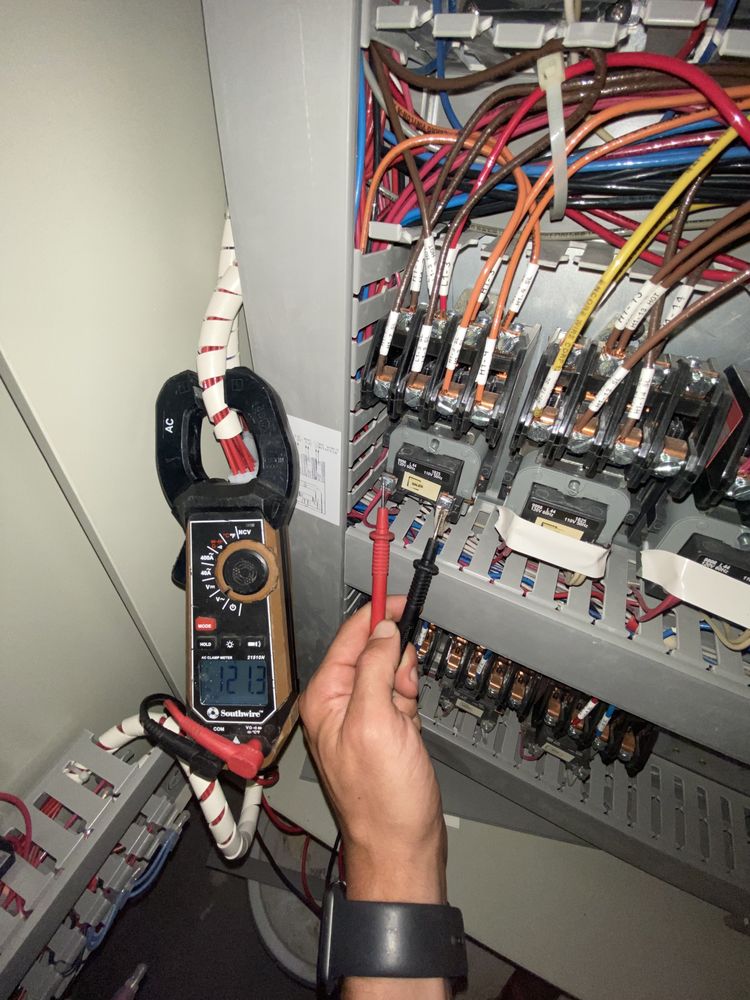
AFCI vs. GFCI: different hazard, different device
A GFCI compares the current going out on the hot wire to the current coming back on the neutral. If even a small amount is missing, it assumes that current found another path, possibly through a person, and shuts off in a fraction of a second. That's why GFCIs sit in kitchens, bathrooms, garages, and outdoor outlets, anywhere water makes a shock more likely.
An AFCI is reading the shape of the electrical waveform for the distinctive pattern of arcing, a tiny, repeated spark rather than a steady current. According to industry estimates cited by the Electrical Safety Foundation International, AFCIs are capable of preventing more than half of the electrical fires that occur in U.S. homes each year, because arcing faults in branch-circuit wiring are one of the most common ignition sources for home electrical fires. A lot of panels now use dual-function breakers that do both jobs in one device, which is common in kitchens and laundry areas where both protections are required.
Where Minnesota code requires AFCI protection
Under NEC 210.12, AFCI protection is required on 120-volt, 15- and 20-amp branch circuits supplying outlets or devices in most finished living areas of a dwelling. That list covers kitchens, family rooms, dining rooms, living rooms, bedrooms, sunrooms, recreation rooms, closets, hallways, and laundry areas. The City of St. Paul's own electrical bulletin spells out that the term 'outlet' is broader than most people assume, it includes light fixtures, smoke detectors, dishwashers, and garbage disposals, not just the receptacles you plug things into.
Minnesota is currently enforcing theNEC, with theedition set to take over for permits filed on or after August 17, 2026. The room list for AFCI hasn't changed in that time. Kitchens and laundry areas were added back in 2014, and bedrooms have required it since 2002, so if your house was built or rewired any time in the last decade, you likely already have some AFCI protection whether you knew it or not.
Why your AFCI breaker keeps tripping
A real arc fault is the scenario an AFCI exists for, but most of the trips electricians get called out for turn out to be something else. Vacuum cleaners, treadmills, and older power tools with brush-type motors throw off electrical noise that can mimic an arc signature closely enough to trip a sensitive breaker, especially on a first-generation AFCI. Shared neutral wiring, common in homes built from the 1950s through the 1980s, is another frequent culprit; if the AFCI can't match the current leaving on the hot wire to what's coming back on its own dedicated neutral, it trips, even with nothing actually wrong.
The pattern matters more than the breaker label. If it trips with nothing plugged in anywhere on the circuit, that points to a wiring problem in the walls or the panel itself, not a nuisance. If it only trips when you run one specific appliance, that's usually the appliance or a shared-neutral wiring setup, and it's a much easier fix. Either way, repeatedly resetting a breaker that keeps tripping isn't a long-term plan. If you've already read our guide on why a GFCI keeps tripping and this feels similar but different, that's exactly right, same panel, same basic idea of a protective shutoff, completely different fault it's watching for.
The remodeling trap: one outlet swap can trigger the requirement
Here's the part that catches a lot of Twin Cities homeowners off guard. Code generally doesn't force you to retrofit AFCI protection onto outlets that already exist and aren't being touched. But the moment you extend a circuit, add a new outlet, or in many cases even replace a receptacle in a covered room, that work can trigger a requirement to bring the circuit up to current AFCI protection. That's a common surprise during kitchen and bedroom remodels, and it's one of the things that can show up on a pre-sale electrical inspection if a past owner did DIY receptacle swaps without pulling a permit.
It's also relevant if you're dealing with aluminum wiring or any older wiring system that's more prone to loose, arcing connections at the terminals. Adding AFCI protection to those circuits during other electrical work is one of the more cost-effective upgrades you can make, and it's worth asking about any time you're already opening up a panel for a panel upgrade.
What to do if you're not sure what you have
Open your panel cover (don't remove anything energized) and look at the breaker labels. AFCI and dual-function breakers usually say so right on the face, and they have a test button like a GFCI. If your home was built or had its panel replaced in roughly the last ten to fifteen years, there's a decent chance you already have some. If you've got an older panel with none of this, or you're planning a remodel that touches a kitchen, bedroom, or living area, that's the time to have an electrician look at the whole circuit, not just swap a breaker and hope.
Frequently asked questions
Is an AFCI breaker the same as a GFCI breaker?
No. A GFCI protects people from shock by detecting current leaking to ground, while an AFCI protects against fire by detecting the electrical signature of arcing in wiring. Some breakers, called dual-function breakers, combine both protections in one device.
Do I have to add AFCI protection to my existing outlets?
Generally no, existing outlets that aren't being touched don't have to be retrofitted. But extending a circuit, adding a new outlet, or replacing a receptacle in a covered room can trigger the requirement for that circuit.
Why does my AFCI breaker trip when I run the vacuum?
Vacuum cleaners and other appliances with brush-type motors create small sparks as part of normal operation, and that electrical noise can look like an arc fault to a sensitive breaker. It's worth having an electrician confirm it's a nuisance trip and not a wiring issue.
What rooms require AFCI protection in Minnesota?
Under the current NEC as enforced in Minnesota, AFCI protection is required in kitchens, bedrooms, living rooms, dining rooms, family rooms, laundry areas, closets, hallways, and similar finished living spaces.
Can I just replace a tripping AFCI breaker with a standard one?
No, and a licensed electrician won't do that for a covered circuit. Removing required AFCI protection takes away the fire detection the code requires and can create liability and safety issues down the line; the right move is to diagnose and fix the actual cause of the trip.
Breaker Keeps Tripping? Let's Find Out Why.
Whether it's a nuisance trip or a real wiring problem, our electricians can diagnose an AFCI issue and get it fixed right the first time.
Schedule Service →