
Intech Blog
Portable Generator Safety: Interlock Kit or Transfer Switch?
A portable generator has to be connected to your house through either a listed interlock kit or a transfer switch, never a cord plugged straight into an outlet. Both devices exist to do one job: make it physically impossible for your generator and the utility to be feeding the panel at the same time. Get that wrong and you're not just risking your own house, you can send live voltage back down the line toward a utility crew working to restore power.
Twin Cities storm season has a way of reminding people how much a fridge, a furnace blower, and a sump pump matter the second the lights go out. A lot of homeowners already own a portable generator from the last big outage, but plenty of them are still running it the wrong way, or thinking about it, which is worse. The wrong way usually involves a double-male "suicide cord" jammed into a dryer outlet, and it's called that for a reason.
The right way is one of two accepted methods: a generator interlock kit mounted on your existing panel, or a manual transfer switch wired to a dedicated set of circuits. Neither is a weekend DIY project. This is panel-level work that needs a permit and a final inspection in Minnesota, and it's exactly the kind of job Intech handles as part of generator installation.
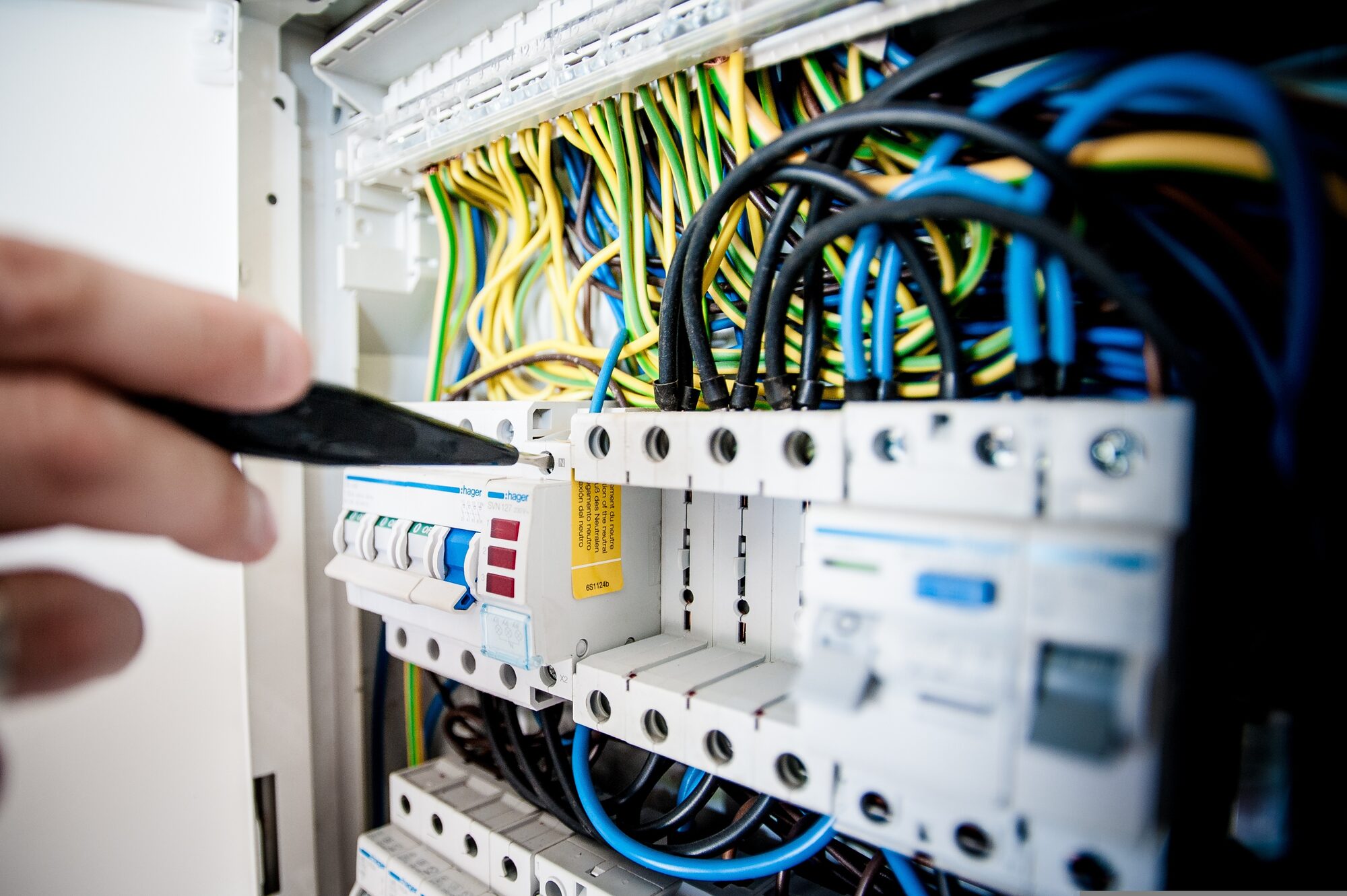
What backfeeding actually does
Every circuit in your house traces back to the same two busbars in your main panel. Plug a running generator into any outlet on that panel with the main breaker still on, and power doesn't just feed one appliance. It travels backward through the branch circuit, out onto the bus, and from there it can push out through your meter and onto the utility line feeding your house.
That's the part people miss. A neighborhood transformer normally steps voltage down from the utility's distribution line to thevolts in your house. Push power backward through it and it works in reverse, stepping your generator'svolts back up to line voltage on the other side. A utility worker restoring power downstream has every reason to assume that line is dead, because it's supposed to be. It isn't a hypothetical risk industry groups worry about for no reason, it's exactly why backfeeding through a receptacle is treated as a serious violation everywhere it's found.
Interlock kit vs. transfer switch
An interlock kit is a mechanical bracket mounted to your existing panel cover. It physically blocks the main breaker and a dedicated generator breaker from both being switched on at once. With the main off and the generator breaker on, the whole panel is available, and you manually choose which circuits to run by flipping their individual breakers.
A transfer switch is a separate piece of equipment, usually a small sub-panel, wired to a specific set of circuits you choose ahead of time, things like the furnace, sump pump, refrigerator, and a few outlets. You flip one switch to move those circuits from utility power to generator power, and the switch makes it mechanically impossible for both sources to be connected at the same time.
- Interlock kits cost less and give you access to the entire panel, but you're responsible for not overloading the generator by switching on too much at once.
- Transfer switches cost more but limit the generator to only the circuits you've pre-wired, so there's less chance of tripping the generator's own breaker under too much load.
- Interlock kits have to match your specific panel brand and model, which isn't always available for older equipment.
- Either option needs a dedicated inlet box mounted outside the house where the portable generator's cord plugs in, not an interior outlet.
What the code is actually protecting against
The National Electrical Code covers this under Article 702, which governs optional standby systems, including portable generators arranged to connect to your home's wiring. The core requirement is that transfer equipment has to be installed in a way that prevents the utility and the generator from ever being connected to the panel at the same time, unless the system is specifically designed and listed for parallel operation, which a home portable setup isn't. That's the entire reason interlock kits and transfer switches exist as products in the first place, and it's why a cord run into a dryer outlet doesn't meet that bar no matter how careful you are about turning off the main.
Sizing the load so you don't overload the generator
A portable generator in the 5,000 to 7,500 watt range can usually cover a furnace blower, a refrigerator, a sump pump, and some lighting, but it can't run everything in the house at once. This is the same load-math problem that comes up when panel capacity gets stretched by heat pumps, EV chargers, and induction ranges, just on a smaller scale. Motor-driven loads like a sump pump or a furnace blower draw several times their running wattage for a second or two on startup, and that surge is what actually trips a generator, not the steady running load.
If your basement depends on a sump pump to stay dry during the same storms that knock out power, it's worth thinking through that circuit specifically before you're standing in the dark deciding what to plug in. We've written before about what a sump pump needs from your electrical setup to keep working when the grid doesn't.
Getting it installed and permitted correctly
This is permitted electrical work in Minnesota, and it gets inspected. An electrician sizes the correct kit or switch for your specific panel, adds the generator breaker if one isn't already there, mounts the hardware, and wires an outdoor inlet so the generator connects from outside the house rather than through a window or a cracked door. That last part matters for a second reason beyond backfeeding: carbon monoxide. The Consumer Product Safety Commission estimates that close topeople die every year in the U.S. from CO poisoning tied to portable generators, almost always because the unit was running too close to the house, in a garage, or near an open window.
If your panel is older or already maxed out on breaker space, that's worth catching before you buy hardware that won't fit. A panel upgrade is sometimes the real first step, and it's a conversation worth having with an electrician before you order an interlock kit that turns out to be the wrong model for your equipment.
Frequently asked questions
Can I just plug my generator into a dryer outlet during an outage?
No. Feeding a generator into any wall outlet backfeeds your home's wiring and can send power out through the meter onto the utility line, which can injure a lineworker restoring power and is treated as a serious code violation everywhere it happens.
Which is better, an interlock kit or a transfer switch?
An interlock kit costs less and gives access to your whole panel, while a transfer switch costs more but limits the generator to a pre-selected set of circuits, which makes it harder to overload. Either one is code-compliant when it's installed and permitted correctly.
Do I need a permit to install a generator interlock kit in Minnesota?
Yes. Connecting a portable generator to your home's fixed wiring through an interlock kit or transfer switch is electrical work that requires a permit and a final inspection, not something to install without one.
How big of a generator do I need to run my furnace and sump pump?
Most homes can cover a furnace blower, refrigerator, sump pump, and some lighting with a generator in the 5,000 to 7,500 watt range, but motor-driven loads draw a heavy startup surge, so it's worth having an electrician run the actual numbers for your home.
Where should a portable generator run during an outage?
Outdoors only, away from windows, doors, and vents. Carbon monoxide from a portable generator is odorless and can be fatal within minutes if it's run in or near an enclosed space, even with a door cracked open.
Connect Your Generator the Safe Way
Intech can size and install a properly permitted interlock kit or transfer switch for your panel, so your portable generator powers your house without putting a utility crew at risk.
Request a Quote →