
Intech Blog
Two-Prong Outlets in Older Twin Cities Homes: Your Options
If your Twin Cities home still has old two-prong outlets, you don't have to rewire the whole house to make them safer. A licensed electrician can legally upgrade most of them to grounded-style or GFCI-protected outlets without opening up your walls, and in some cases a full rewire genuinely is the better long-term move, especially if you're already dealing with aluminum wiring or knob-and-tube.
Two-prong outlets show up constantly in Twin Cities neighborhoods full of homes built before the early 1960s, which is roughly when electrical codes started requiring a grounding conductor at every outlet. Before that, houses were wired with just two conductors, hot and neutral, and there was no third wire to carry a fault safely away from you if something went wrong inside an appliance.
That doesn't automatically make your house a fire hazard. A two-prong outlet, left as a two-prong outlet, is legal and has been for decades. The trouble starts when someone tries to make it look modern without actually making it safe, and that's the part we see go wrong on service calls all over Minneapolis and St. Paul.
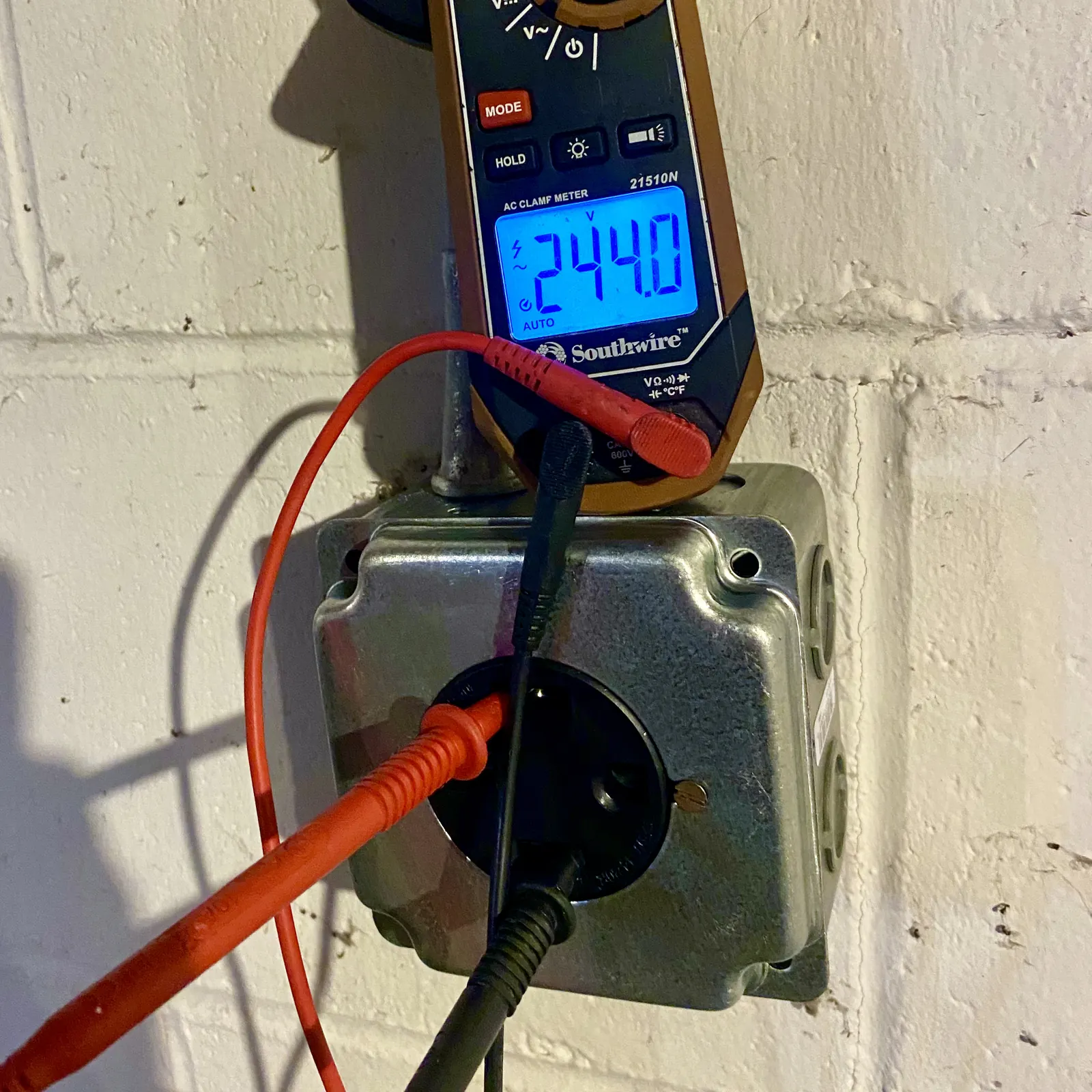
Why so many older homes still have them
Before the early 1960s, standard residential wiring practice was two-wire, no ground. That covers a lot of housing stock in Minneapolis, St. Paul, and older first-ring suburbs, plus plenty of farmhouses and lake cabins further out. If your home was built before that era and hasn't had a full rewire, there's a decent chance some or all of the original circuits are still two-wire, even if a previous owner swapped in three-prong-looking outlets along the way.
That last part matters more than most homeowners realize. A three-prong outlet doesn't mean the circuit behind it is grounded. Plenty of houses have three-slot receptacles sitting on old two-wire circuits, which creates what electricians call a false ground: it looks safe, tests as if nothing's wrong to the naked eye, but there's no actual path for fault current to go anywhere.
The real risk isn't the missing prong
An honest two-prong outlet that hasn't been touched is a known quantity. The danger comes from the workarounds people use to make three-prong plugs fit. Cheater adapters, the little three-to-two prong pigtails, are widely considered more hazardous than the ungrounded outlet itself because they give you false confidence that grounding exists when it doesn't, and they put strain on old receptacles that weren't built for it.
Without a ground path, a fault inside an appliance, a frayed cord, a shorted motor, has no safe route to bleed off, which raises your shock risk and, over time, your fire risk too. Surge protection also doesn't work the way you'd expect on an ungrounded circuit, since a surge protector needs a ground to divert excess voltage away from your equipment. If you've got sensitive electronics plugged into old two-prong outlets, that's worth a second look, and it's part of why we get asked about whole-house surge protection so often in older homes.
Your legitimate options, from least to most invasive
The National Electrical Code gives homeowners a few different paths here, and none of them require tearing your house apart just to make an outlet safer. What's right depends on your budget, how long you plan to stay in the house, and what else is going on with the panel and wiring.
- Leave it as an honest two-prong outlet. Not required to change it, and it's not lying to anyone about what it can do.
- Replace it with a GFCI outlet, labeled 'No Equipment Ground.' This is the option most homeowners land on. It doesn't add a ground, but a GFCI monitors current balance and trips fast enough to prevent a lethal shock even without one, which is why code allows this as a legitimate substitute for a full ground.
- Run a dedicated ground wire back to the panel or a properly grounded point. This is the only way to get a genuinely grounded outlet without a broader rewire, and it only works where the path exists to actually run that wire.
- Do a full rewire of the circuit, or the house. Makes the most sense if you're already dealing with aluminum wiring, knob-and-tube, or a panel that needs upgrading anyway.
A quick check you can safely do yourself
You can get a rough read on your outlets without touching any wiring. A cheap plug-in circuit tester from the hardware store will tell you whether an outlet is wired correctly and whether it's actually grounded, just plug it in and read the light pattern on the tester. It won't tell you the condition of the wire behind the wall or whether you've got a false ground situation everywhere in the house, but it's a fine first step before you call someone out.
If you find a mix of results, some outlets grounded, some not, some acting strange, that's a sign it's time for an actual assessment rather than more guessing. That's especially true if you're also noticing warm cover plates, flickering, or breakers that trip for no obvious reason.
How Intech approaches this
We start with an assessment of what you've actually got, room by room, rather than assuming every outlet in an older house needs the same fix. Sometimes the right answer is a handful of GFCI swaps at the outlets that matter most, bathrooms, kitchen, garage, anywhere near water or metal appliances. Other times, once we're in there, it's clear the smarter long-term move is whole-home rewiring, especially in houses where two-prong outlets are just one symptom of wiring that's past its service life.
If your panel is also getting old or undersized for what you're running today, we'll flag that during the same visit rather than making you pay for two separate trips. A lot of the older Twin Cities housing stock we work in needs both an outlet strategy and a look at panel upgrades at the same time.
Frequently asked questions
Is it illegal to have two-prong outlets in my house?
No. If they haven't been altered, honest two-prong outlets are grandfathered and legal to leave as-is. Code doesn't force you to retroactively upgrade outlets that were compliant when installed.
Can I just use a three-to-two prong adapter?
You can, but most electricians consider it the riskier option, not the safer one. It creates a false sense of grounding and puts mechanical strain on old receptacles, and it doesn't give you any real fault protection.
Does a GFCI outlet actually ground my circuit?
No, a GFCI doesn't add a ground path. It protects you by monitoring current flow and shutting off power almost instantly if it senses a fault, which is why code allows it as a substitute for grounding on old circuits.
How do I know if my three-prong outlet is actually grounded?
A plug-in circuit tester from the hardware store will tell you in seconds. If it reads as ungrounded on an outlet with three slots, that outlet is likely a false ground on an old two-wire circuit.
Will ungrounded outlets stop me from selling my house?
Usually not on their own. They're common in pre-1960s homes and typically become a negotiation point rather than a deal-breaker, often resolved with GFCI upgrades before closing.
Should I upgrade every outlet at once or just the important ones?
Many homeowners start with the outlets that see the most risk, kitchens, bathrooms, garages, and areas near water, then expand from there based on what an electrician finds once the panel and wiring get a proper look.
Get Your Outlets Assessed the Right Way
Intech Corporation can walk through your home, tell you exactly which outlets need attention, and give you a straight recommendation on GFCI upgrades versus a fuller rewire.
Get a Quote →