
Intech Blog
Sump Pump Battery Backup: Does Your MN Basement Need One?
A sump pump battery backup is a secondary pump and a deep-cycle battery that take over automatically the moment your primary pump loses power or gets overwhelmed, and in a Twin Cities basement it's often the whole difference between a damp floor and a five-figure repair bill. The part homeowners usually miss is that the backup is only as reliable as the electrical work behind it. That means the primary pump's circuit, the GFCI protection code has required for years, and whether your panel has room for any of it in the first place.
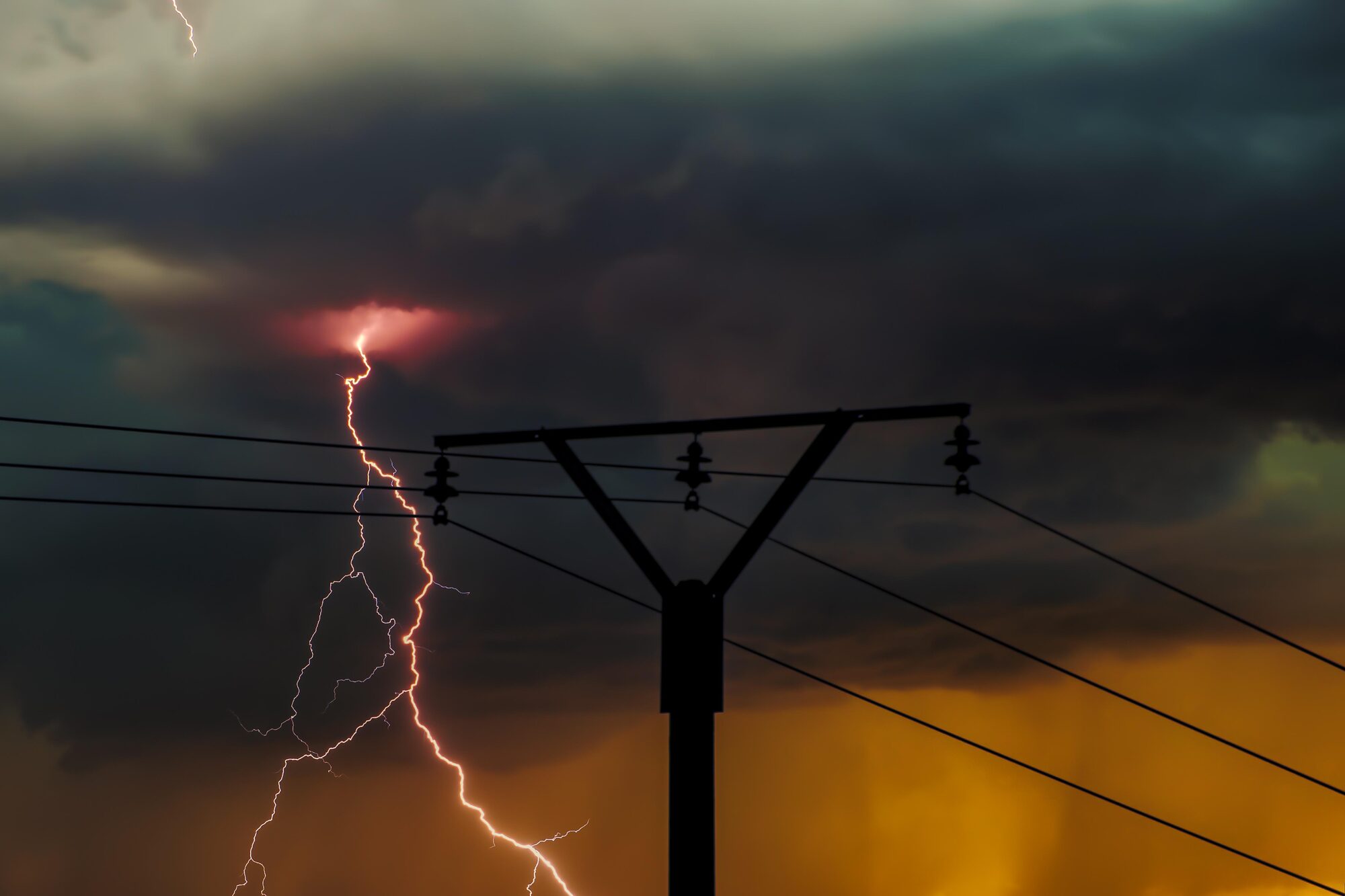
Here's the pattern that catches people every fall and spring: heavy rain moves in, the ground is already saturated, and the same storm that's pushing water toward your foundation is also the one snapping tree limbs onto power lines. Storms that cause flooding are often the same storms that knock out power lines, whether it's high winds bringing down branches, lightning hitting a transformer, or heavy snow collapsing lines under its own weight. In one Twin Cities storm, thousands of Xcel Energy customers lost power overnight while rain fell at a rate of one to two inches an hour across the metro. Your sump pump doesn't care why the power's out. It just stops.
In most homes the main sump pump runs on standard household electricity, which works fine right up until the power goes out during a storm and the pump stops working completely. If water keeps entering the sump pit after that, it rises fast and eventually overflows onto the basement floor. That's the exact scenario a battery backup is built to cover, and it's also why Minneapolis's own emergency management guidance points out that homes with plumbing fixtures or floor drains below street level can flood, and that water damage from heavy rain is often not covered by a standard homeowner's policy.
It's not just outages, either
A battery backup earns its keep in two different situations, not just the obvious one. The first is a power outage during a storm. The second is a primary pump that simply can't keep up: a sump pump can become overwhelmed during a torrential downpour, and if the volume of water coming in outpaces what the pump can move out, the overflow ends up on your basement floor regardless of whether the power is on. A battery backup system increases the primary pump's total capacity in that scenario, kicking in a second pump to help move water out faster, not just standing by for a blackout.
What's actually in a backup system
A typical setup pairs a 12-volt deep-cycle battery with either a dedicated backup pump sitting a little higher in the pit, or a battery-powered version of your existing pump, plus a charger that keeps the battery topped off between storms and an alarm that tells you when it's running. There's also a water-powered option worth knowing about: a hydraulic pump that runs off your home's water pressure instead of a battery, which some homeowners like as a second layer because it doesn't depend on a charge level at all. Each option has tradeoffs in runtime, capacity, and maintenance, and the right one depends on your pit size, your typical inflow, and how long your outages tend to run.
The electrical side is where projects go wrong
GFCI protection on sump pumps isn't a new idea, and it isn't something we're inventing here: the National Electrical Code added sump pumps, along with dishwashers and a few other appliance types, to the list of loads that require ground-fault protection back in theedition, and that requirement has carried forward since. If your sump pump circuit doesn't have it, or if the GFCI is nuisance-tripping every time the pump cycles, that's worth sorting out before you add a backup system on top of it. We've written before about why a GFCI keeps tripping and what that pattern is actually telling you.
A dedicated circuit is a separate question. The NEC itself doesn't flatly require every sump pump to sit on its own circuit, and whether yours does can come down to local practice and your inspector's read of the situation. That said, it's still a smart move, because a shared circuit means a space heater, a shop vac, or a freezer sharing that breaker can trip it at the exact wrong moment. If you're adding a backup system, a charger, and possibly a monitored alarm, it's worth having an electrician confirm your panel actually has the capacity and open space for a dedicated circuit before you buy equipment. That's the same question we cover in our post on panel capacity for new electrical loads.
Battery backup vs. a whole-home generator
A battery backup is cheap insurance against short outages, typically running from a few hours up to about a day depending on how hard the pump has to work. It won't save you in a multi-day outage on its own. If you're already thinking about a standby generator for the rest of the house, the sump pump circuit is one of the easiest things to add to that transfer switch, and it means you're covered for both a two-hour blip and a three-day ice storm outage. The two approaches aren't competing, they're complementary, and a lot of the homes we work in end up with both: a battery backup for the first few hours, and a generator picking up the load if the outage runs long.
Do this before the ground freezes
If your plan involves running a new circuit to the sump pit, adding an exterior generator connection, or trenching anything outside for a transfer switch, fall is the window. Once Minnesota's ground actually freezes, that kind of work gets slow and expensive fast. We covered the real timeline for that in our post on getting underground electrical work done before frost, and it applies just as much to a sump pump project as it does to a generator or EV charger install.
Signs your current setup needs a look
None of this is a DIY panel job, and we wouldn't want it to be. Adding or moving a circuit means working at the panel, and that's exactly the kind of task where a licensed electrician needs to be involved rather than a homeowner working inside energized equipment. If any of the signs above sound familiar, our troubleshooting and repair team can take a look at the whole circuit, not just the pump.
- The sump pump outlet is a standard receptacle with no GFCI protection at all.
- The pump shares a circuit with other loads and the breaker has tripped before.
- There's no alarm or notification if the pump loses power while you're away.
- The battery on an existing backup unit is more than three to five years old and hasn't been tested.
- You're planning a finished basement remodel and haven't had the sump circuit inspected in years.
Frequently asked questions
Does my sump pump need to be on its own dedicated circuit?
The National Electrical Code doesn't flatly require it in every case, but it's still widely recommended and often expected locally, since a shared circuit means another appliance can trip the breaker at the worst possible time.
Is GFCI protection required on a sump pump?
Yes. The National Electrical Code added sump pumps to the list of appliances requiring ground-fault protection starting with the 2020 edition, and that requirement has stayed in place through more recent code cycles.
How long will a battery backup run during an outage?
It depends on the battery size and how hard the pump has to work, but most residential systems are built to run anywhere from several hours up to roughly a day on a single charge.
Can I just run my sump pump off a portable generator during an outage?
You can, but only with a proper transfer setup, not by running an extension cord into a panel or outlet improperly. If you already have or are considering a standby generator, wiring the sump pump into that system is a cleaner, safer long-term fix.
What's the difference between a battery backup and a water-powered backup pump?
A battery backup runs off a rechargeable 12-volt battery and needs periodic testing and battery replacement, while a water-powered backup uses your home's water pressure to move water out and never needs a charge, though it does use more household water while running.
How do I know if my basement's sump pump wiring is actually up to code?
The clearest way is to have an electrician inspect the circuit directly, since GFCI protection, circuit sharing, and panel capacity all affect whether the setup is safe and reliable.
Get Your Sump Pump Circuit Checked Before the Next Storm
We'll look at your existing sump pump wiring, GFCI protection, and panel capacity, and help you plan a battery backup or generator tie-in that actually holds up during a Minnesota storm.
Request a Quote →