
Intech Blog
Emergency Exit Lighting Testing: What MN Businesses Must Do
Minnesota's fire code requires two tests on every battery-backed emergency light and illuminated exit sign in a commercial building: a 30-second functional test every month, and a power test at least once a year that runs a minimum ofminutes. That annual number is actually shorter than the 90-minute test called for under NFPA 101, the national Life Safety Code, because Minnesota wrote its own, less strict number into the state fire code amendments. Skip either test, or fail to keep a written log of it, and you're exposed the moment a fire marshal walks the building or the power actually goes out and half your exit signs don't come on.
This isn't an obscure rule that only applies to hospitals and high-rises. It applies to basically every place of business, every school, every apartment building common area, and every restaurant with an occupant load that requires a marked exit. If your building has a lit exit sign over a door, there's a battery inside it, and that battery is supposed to be tested on a schedule, with the results written down somewhere your local fire code official can ask to see.
The reason this comes up so often for us is timing. Fall is when a lot of Minnesota facility managers are already thinking about exterior lighting and darker afternoons, the same darkness-driven check we cover for parking lots, and it's a natural point to walk the interior too. It's also the season when storm-driven outages start blending into ice-and-wind outages, so the gap between now and when these lights actually get used for real can be short.
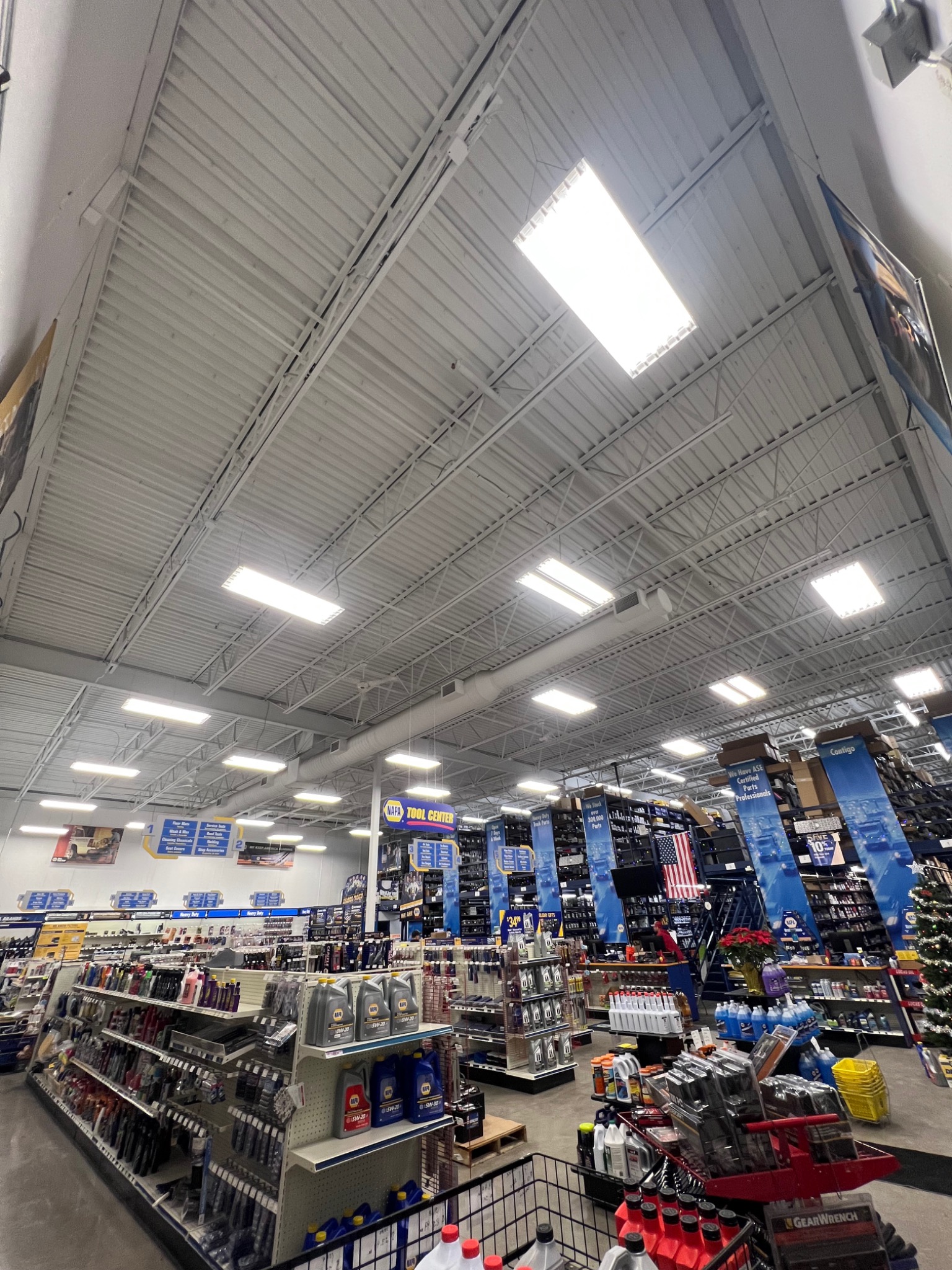
The monthly test:seconds, and it's not optional
Minnesota's fire code requires a monthly activation test on every battery-operated emergency light and exit sign, run for a minimum ofseconds. Most units have a small test button or switch on the housing that simulates a power outage and forces the unit onto battery power. Press it, watch every lamp on the unit light up and hold for the fullseconds, then let it go back to normal charging. That's a safe check any staff member can do without opening anything electrical.
There's a catch worth knowing about, especially on older units: on some aging emergency lights, the internal circuitry that's supposed to disconnect the unit from normal AC power can fail quietly. When that happens, pressing the test button still lights the lamp, but you're not actually testing whether the battery works, because the unit never disconnected from wall power in the first place. That's one of the more common ways a building passes its own monthly checks for years and then fails hard during a real outage.
The annual test: Minnesota'sminutes vs. the national 90
This is the part that trips people up. The national model code, NFPA 101, calls for an annual functional test lasting a minimum ofminutes, and a lot of the compliance guides and checklists you'll find online quote that 90-minute figure as gospel. Minnesota adopted a shorter number in its own fire code amendments: the annual power test here only has to run a minimum ofminutes, with all emergency lighting staying sufficiently illuminated for that entire period.
That doesn't meanminutes is generous. Batteries degrade in ways that a short test won't catch, and a unit that holds a charge fine forminutes can still be well past its useful life. A maintenance-free lead-acid battery is generally good for somewhere in thetoyear range, and nickel-cadmium batteries can run longer, closer totoyears, but heat, cold, and age all shorten that in practice. For a building with more than a handful of units, or one where the emergency lighting shares circuits with a generator or transfer switch, it's worth having an electrician run and document the annual test rather than assigning it to whoever's free that week.
Self-testing units get a break, but not a full pass
If your building has newer self-testing or self-diagnostic emergency lighting, the code gives you an exception to the manual monthly test. These units run their own 30-second test automatically at least once everydays and show pass or fail on a built-in indicator light. That satisfies the monthly requirement, but you still have to visually check that indicator every month and log what you saw. Skipping that visual check because "the light does it automatically" is a common gap we see during pre-inspection walkthroughs.
Documentation is half the requirement
Minnesota's fire code requires written records of every test kept on file for the fire code official to review. That means a log with the date, the unit or location tested, the result, and any repairs made. It's smart practice to have at least two people in the building who know where that log lives, because if it can't be produced during an inspection, it's treated the same as if the test never happened at all.
Local fire departments across the metro consistently list non-operational emergency lighting and dark or damaged exit signs among the most common violations they find during routine commercial inspections. It's a cheap fix to catch on a monthly walkthrough and a much bigger headache to explain after the fact.
When a unit fails, what's actually wrong
A unit that won't light, dims fast, or won't hold the full test duration is usually one of a few things: a dead or swollen battery past its service life, a tripped breaker or loose connection feeding the unit's normal power leg, or corrosion at the battery terminals. On buildings that recently went through an LED retrofit or a tenant improvement project, we also see compatibility problems where a new fixture's driver wasn't matched to the existing emergency ballast or battery pack, so the emergency function quietly stops working even though the regular lighting looks fine.
None of that is a homeowner-style fix. Emergency lighting circuits tie back into your building's panel and, in a lot of commercial spaces, into a generator or central inverter system. Diagnosing and correcting it means checking circuits at the panel and replacing components rated for life-safety use, which is licensed electrician work, not a weekend project.
Building it into a maintenance routine
The easiest way to stop chasing this every year is to fold it into a standing maintenance visit instead of treating it as its own separate task. If you're already scheduling preventative electrical maintenance or working through the kind of documented upkeep we described in our look at NFPA 70B's maintenance requirements, emergency lighting testing fits naturally into that same visit, along with your facility's other electrical safety obligations we covered in our rundown on NFPA 70E's recent update.
Frequently asked questions
How often does emergency lighting need to be tested in Minnesota?
Every battery-operated emergency light and exit sign needs a 30-second functional test monthly and a power test at least once a year, run for a minimum of 30 minutes under Minnesota's fire code.
Is Minnesota's annual test the same as the national 90-minute NFPA 101 test?
No. NFPA 101, the national model code, calls for a 90-minute annual test, but Minnesota's fire code amendment sets the state minimum at 30 minutes for the annual power test.
Do self-testing emergency lights still need monthly checks?
Yes. Self-diagnostic units are exempt from the manual 30-second monthly test, but you still have to check the unit's status indicator monthly and log the result.
Who is responsible for testing emergency lighting, the owner or the tenant?
It depends on the lease, but the fire code holds the building owner or occupant responsible for keeping the required tests and written records available to the fire code official, so it's worth spelling out in a commercial lease who actually does it.
How long do emergency light batteries typically last?
A maintenance-free lead-acid battery generally lasts around 5 to 10 years and nickel-cadmium batteries can run closer to 10 to 15 years, though heat and cold shorten both in practice.
What happens if a fire marshal finds untested or non-operational emergency lighting?
It's cited as a violation and you'll get a follow-up inspection to confirm it's fixed, and non-operational emergency lighting and dark exit signs are consistently among the most common findings during routine commercial fire inspections.
Get Your Emergency Lighting Tested and Documented
Intech can run and log your annual power test, troubleshoot units that failed their monthly check, and fold emergency lighting into a standing maintenance plan for your building.
Schedule an Inspection →