
Intech Blog
NFPA 70B: Why Electrical Maintenance Isn't Optional Anymore
NFPA 70B, the National Fire Protection Association's document on electrical equipment maintenance, stopped being a book of friendly suggestions back in January 2023. It's now written as a standard, with "shall" instead of "should," which means facilities are expected to run a documented Electrical Maintenance Program instead of just calling someone when a breaker trips or a motor smokes. If you own or manage a commercial or industrial building in the Twin Cities, that shift is quietly changing what your insurance carrier, your fire marshal, and OSHA expect to see when something goes wrong.
For most of its history, NFPA 70B was labeled a "Recommended Practice." It told maintenance managers what a good electrical preventive maintenance program should look like, but nobody could really hold you to it. That changed with theedition, which reclassified the document as a full standard. It applies to industrial plants, institutional and commercial buildings, and large multifamily complexes. It does not apply to consumer appliances or single-family homes, so this isn't something a homeowner needs to lose sleep over. If you run a warehouse, a manufacturing plant, an office building, a school, or an apartment complex with more than a handful of units, though, it's worth understanding.
Here's the nuance that gets glossed over in a lot of marketing content: being a "standard" doesn't automatically make NFPA 70B law. It becomes enforceable when a jurisdiction adopts it into a fire or building code, when an insurer requires it as a condition of coverage, or when it gets written into a contract. What's happening in practice is that all three of those things are increasingly true. Insurance risk engineers are already asking facility owners for documentation of maintenance programs, and fire marshals and OSHA investigators reference NFPA standards after an incident even where they aren't the primary code in force.
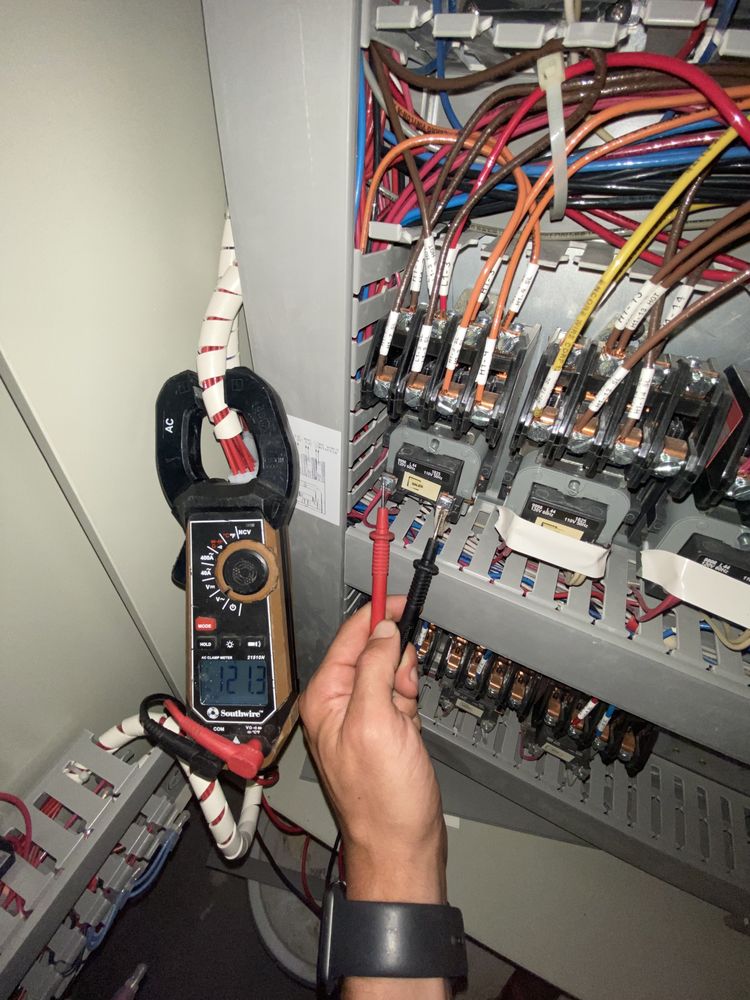
What actually changed in theedition
The core shift is language. Older editions of NFPA 70B said maintenance intervals "should" follow a certain schedule. The current standard says they "shall." That one-word change turns a best-practice recommendation into something an authority having jurisdiction, an insurance underwriter, or an OSHA investigator can point to and ask why you aren't doing it. The standard also moved away from fixed, one-size-fits-all maintenance intervals toward a condition-based approach, where how often you inspect and test a piece of gear depends on its physical condition, how critical it is to your operation, and the environment it sits in, not just a calendar date someone picked years ago.
Who this actually affects
NFPA 70B is written for industrial plants, institutional and commercial buildings, and large multifamily residential complexes. That covers a lot of the Twin Cities commercial and industrial base: manufacturing floors, distribution centers, medical and dental offices, retail centers, schools, and apartment buildings with shared electrical infrastructure. It does not reach into single-family homes or consumer appliances, so if you're a homeowner reading this, the practical version for you is just keeping up with things like flickering lights or a panel that's showing its age, not standing up a formal maintenance program.
For everyone else, the standard puts responsibility squarely on the facility owner or manager. You're expected to own the existence of a written program, even if a contractor does the actual inspection and testing work.
What a real Electrical Maintenance Program includes
A documented EMP under NFPA 70B isn't a folder of old invoices. It's a repeatable process that ties equipment identification, inspection results, and corrective action together in one place. In practice, that means:
- An inventory of your electrical equipment, with condition, criticality, and location documented for each piece.
- Current single-line diagrams that actually match what's installed, not drawings from a renovation two owners ago.
- Inspection and testing intervals set by equipment condition rather than an arbitrary annual checkbox.
- Infrared thermographic scans of panels, switchgear, and connections under load, since loose or corroded connections generate heat long before they generate smoke or a failure.
- Written records of deficiencies found and the corrective action taken, kept somewhere an insurer or inspector can actually review.
Why insurers care more than most people expect
Electrical failures rank among the more common causes of industrial and commercial fires, and a lot of those failures trace back to connections that were never checked until they failed. Insurance carriers know this, which is part of why NFPA 70B exists at all, and it's why risk engineers from major commercial insurers increasingly ask for evidence of a maintenance program before renewing a policy or adjusting a claim. A documented EMP, even a modest one, gives you something concrete to hand over. Showing up with nothing when a claims adjuster asks how you maintain your switchgear is not a great position to be in, especially after a fire or an unplanned outage that could have been caught with a routine scan.
This connects directly to arc flash risk, too. Equipment that isn't properly maintained can't be assumed to be in normal operating condition, which changes how it has to be treated for safe work purposes. If your facility has updated its arc flash labeling under the 2026 NEC, a maintenance program is the other half of that safety picture, not a separate project.
Getting a Twin Cities facility caught up
Most facilities we talk to haven't formally addressed this yet, and that's not unusual. It's the kind of thing that sits below the radar until an insurer asks for it or a piece of equipment fails at the worst possible time. The starting point is usually a walkthrough: an equipment inventory, a condition assessment, and an infrared scan of your panels and switchgear while they're under normal load. From there you can build a realistic maintenance schedule instead of guessing at intervals or running equipment until it tells you something's wrong.
This is exactly the kind of work our preventative electrical maintenance team handles for commercial and industrial clients around Minneapolis and St. Paul, and it pairs naturally with our industrial controls and motor control work when equipment condition assessments turn up gear that needs more than a scan. It's also worth thinking about alongside your exposure to grid alerts and brownouts, since stressed equipment during high-demand periods is exactly when marginal connections tend to fail.
Frequently asked questions
What is NFPA 70B?
NFPA 70B is the National Fire Protection Association's Standard for Electrical Equipment Maintenance. It covers how industrial, institutional, and commercial electrical systems should be inspected, tested, and maintained through a documented Electrical Maintenance Program.
Is NFPA 70B legally required in Minnesota?
NFPA 70B is a standard, not automatically a law. It becomes enforceable when a local authority having jurisdiction adopts it, when it's incorporated into a regulation, or when an insurer or contract requires it, and that's increasingly common even without a formal local adoption.
Does NFPA 70B apply to my house?
No. NFPA 70B is written for industrial plants, institutional and commercial buildings, and large multifamily complexes. Single-family homes and consumer appliances are specifically excluded.
What happens if my facility doesn't have a documented maintenance program?
You could face pushback from your insurance carrier during underwriting or after a claim, and if an incident triggers an OSHA or fire marshal investigation, the absence of a documented program can work against you even without a specific local mandate.
How is NFPA 70B different from NFPA 70 and 70E?
NFPA 70 is the National Electrical Code and covers how systems are installed. NFPA 70E covers how workers safely perform electrical work. NFPA 70B covers how existing equipment should be inspected and maintained over its life, and the three are meant to work together.
Get Your Facility's Maintenance Program Started
Our team can walk your facility, assess your equipment, and help you build a documented maintenance program that holds up with insurers and inspectors alike.
Schedule an Assessment →