Intech Blog
Arc Flash Labeling Under the 2026 NEC: What Changed
If you own or manage a commercial or industrial building in the Twin Cities, theNational Electrical Code changes which equipment needs an arc flash warning label and what that label has to say. The old rule only required a permanent label on service equipment rated 1,200 amps or higher; theedition drops that threshold to 1,000 amps and pulls feeder-supplied gear like switchboards, switchgear, and motor control centers into the same requirement. Minnesota has adopted theNEC, and the state's electrical licensing exams move over to it starting September 8, 2026, so this isn't a change your facility can quietly ignore. A compliant label has to show the system voltage, the arc flash boundary, and either the incident energy or the required PPE category, and keeping that information accurate is on the building owner, not the electrician who installed the gear years ago.
This one snuck up on a lot of facility managers. Most people paid attention to the bigger headlines around Minnesota's 2026 code adoption, but the arc flash marking changes in Section 110.16 are the kind of detail that gets missed until an inspector or an insurance auditor asks for documentation you don't have. It matters more now too, because the Twin Cities are adding electrical load fast, from expanding manufacturing space to the equipment rooms tied to Minnesota's data center boom, and every new feeder-supplied panel or MCC installed after the new code takes effect falls under the tighter threshold.
This affects more buildings than people assume. Warehouses, manufacturing plants, multi-tenant office buildings, hospitals, and grocery stores with 1,000-amp-plus feeders all have equipment that likely needs a compliant label now, even if it didn't a few code cycles ago. A lot of older commercial buildings around Minneapolis and St. Paul never had proper labeling in the first place, and property owners are often surprised to learn the responsibility for fixing that sits with them, not with whoever built the panel.
What Actually Changed in Section 110.16
The prior code split arc flash marking into two parts: a general warning sticker for switchboards, panelboards, industrial control panels, and motor control centers likely to be serviced while energized, and a separate, more detailed permanent label required only on service equipment rated 1,200 amps or more. TheNEC folds both of those into a single section, retitled Arc-Flash Hazard Marking, and lowers the amperage threshold to 1,000 amps for both service equipment and feeder-supplied equipment. That second part is the real change for a lot of buildings. It's no longer just the main service gear that needs the detailed label; feeders that supply downstream switchgear, panelboards, and MCCs at 1,000 amps or above now carry the same requirement.
The equipment types covered read like a facility's entire distribution system: switchboards, switchgear, enclosed panelboards, industrial control panels, meter socket enclosures, and motor control centers, wherever a qualified person might reasonably need to examine, adjust, or service that equipment while it's energized. Dwelling units are excluded, so a single-family home panel doesn't fall under this rule, but nearly every commercial or industrial occupancy does.
What a Compliant Label Actually Has to Say
A sticker that just says "Danger: Arc Flash Hazard" doesn't cut it anymore, and honestly it hasn't for a while. The industry standard that fills in the NEC's blanks, NFPA 70E, spells out the minimum content: the nominal system voltage, the arc flash boundary distance, and at least one of the following, either the calculated incident energy with its working distance, the minimum arc rating of clothing required, or a site-specific PPE category. The label also needs the date it was applied, since arc flash data changes as a facility's electrical system changes.
- Nominal system voltage
- Arc flash boundary distance
- Incident energy and working distance, minimum arc-rated PPE, or a site-specific PPE category
- The date the label was applied or last updated
Who's Actually on the Hook for This
OSHA doesn't have a single line item that says every panel needs an arc flash sticker. What it does require is that employers protect workers from recognized hazards and mark equipment with descriptive ratings, and arc flash is a well-recognized hazard in any facility with energized gear. NFPA 70E is the industry consensus standard that fills that gap, and it's explicit about one thing: the owner of the electrical equipment is responsible for the documentation, installation, and upkeep of arc flash labels, not the manufacturer and not the contractor who originally installed the panel. If you inherited a building, bought equipment secondhand, or just never had a study done, that responsibility still lands on you.
When It's Time for a New Arc Flash Study
Labels aren't a one-and-done job. The general industry guidance is to review an arc flash study roughly every five years, or sooner if the facility's electrical system changes in a meaningful way, a new service, an added feeder, a transformer swap, or even a breaker setting adjustment can shift the incident energy numbers enough to make an old label wrong. An outdated label is arguably worse than no label at all, because it gives a technician false confidence about what PPE they actually need. Study costs vary a lot depending on the size of the facility and how much equipment needs to be modeled, running anywhere from a few thousand dollars for a small building with a simple system up into five figures for a larger industrial site with a lot of switchgear and multiple services.
Why This Isn't a DIY Project
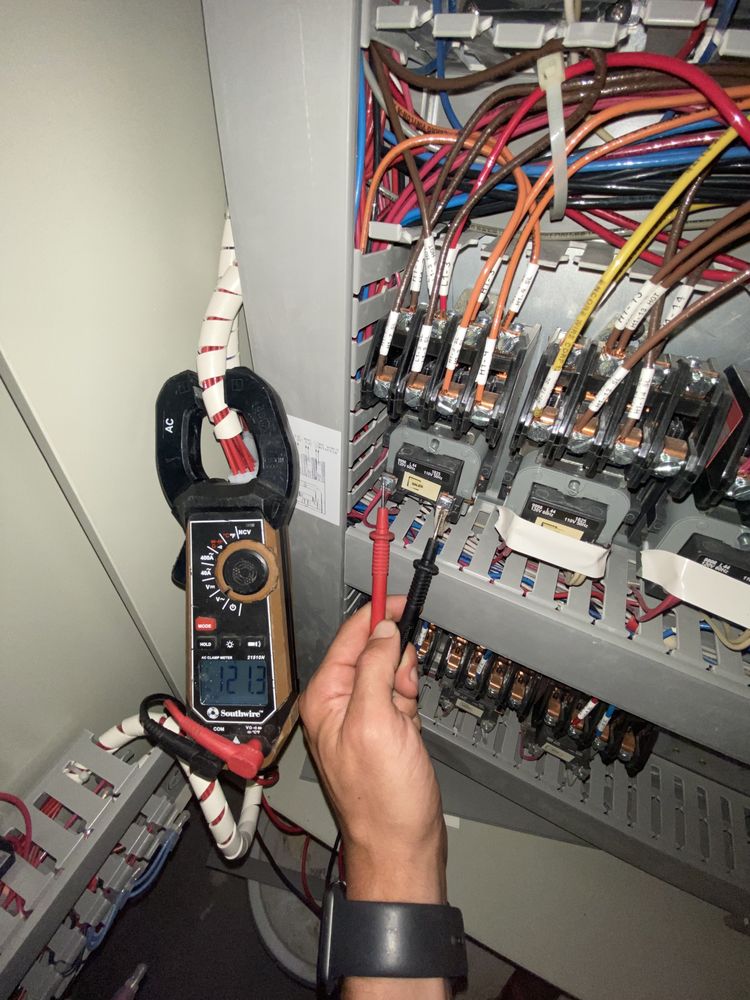
Figuring out incident energy and fault current at every bus in your building takes field data, a one-line diagram, and calculations most facility managers aren't equipped to run themselves, and it means someone has to be in front of live equipment to gather that data safely. This is a job for a licensed electrical contractor working with proper test equipment and PPE, not something to hand off to whoever's handy with a label maker. If your last electrical inspection is more than a few years old, it's also worth pairing an arc flash review with an infrared inspection to catch loose connections and overheating components before they turn into bigger problems.
How Intech Handles This for Twin Cities Facilities
We work through this the same way for every facility: walk the electrical system, document every switchboard, panelboard, and motor control center in scope, run the numbers, and get compliant labels applied where they're actually needed instead of guessing. It's work that fits naturally alongside our industrial power distribution and industrial controls and motor controls services, and it's a good candidate to add to a preventative maintenance plan so labels get reviewed on a schedule instead of forgotten until something goes wrong.
Frequently asked questions
What is an arc flash?
An arc flash is a sudden release of heat and light energy caused by an electrical fault jumping through the air between conductors, and it can cause severe burns or equipment damage in a fraction of a second.
Does OSHA require arc flash labels?
OSHA doesn't have a standalone regulation requiring arc flash labels, but it does require employers to protect workers from recognized electrical hazards, and following NFPA 70E's labeling requirements is the standard way facilities demonstrate compliance.
Do homes need arc flash labels?
No. The NEC's arc flash marking requirements specifically exclude dwelling units and apply to commercial and industrial occupancies.
How often should arc flash labels be updated?
Industry guidance calls for reviewing arc flash studies roughly every five years, or sooner after any major change to the electrical system such as a new service, added feeder, or equipment upgrade.
Who is responsible for arc flash labeling in a commercial building?
The building or equipment owner is responsible for the documentation, installation, and upkeep of arc flash labels, not the equipment manufacturer or the contractor who originally installed it.
What equipment needs an arc flash label under the 2026 NEC?
Switchboards, switchgear, enclosed panelboards, industrial control panels, meter socket enclosures, and motor control centers in non-dwelling occupancies, with service and feeder-supplied equipment rated 1,000 amps or more requiring the detailed permanent label.
Get Your Facility's Arc Flash Labels Current
If your building's electrical system has grown or changed since its last arc flash study, or you're not sure your labels meet the 2026 NEC, Intech can assess your equipment and bring it up to date.
Request a Quote →