Intech Blog
Why Infrared Electrical Inspections Are Now Standard Practice
An infrared electrical inspection uses a thermal camera to scan energized panels, switchgear, and motor control centers while they're running under normal load, spotting hot spots from loose lugs, overloaded circuits, or failing components weeks or months before they trip a breaker or start a fire. It doesn't require shutting anything down. For a lot of Twin Cities businesses, this has gone from a nice-to-have to something insurers and safety programs now expect to see documented. If your building has aging switchgear or a service panel nobody's opened up in years, it's worth getting on the schedule.
NFPA 70B, the national standard for electrical equipment maintenance, went through a significant change in itsedition. It was reclassified from a "recommended practice" to an actual standard, and the update built in a condition-based maintenance framework that leans heavily on infrared thermography as one of the main tools for catching problems before they become failures. That's not a small wording change. When an insurance underwriter, a corporate safety team, or an OSHA inspector goes looking for a recognized benchmark for what a responsible electrical maintenance program looks like, 70B is the document they reach for.
Minnesota's commercial and industrial base has been adding electrical load fast, from manufacturing plants running more automation to the wave of data center construction across the metro. More load on aging gear means more heat, more stress on connections, and more reasons a five-minute thermal scan beats finding out about a problem the hard way, in the middle of a shift, with equipment down.
How the Scan Actually Works
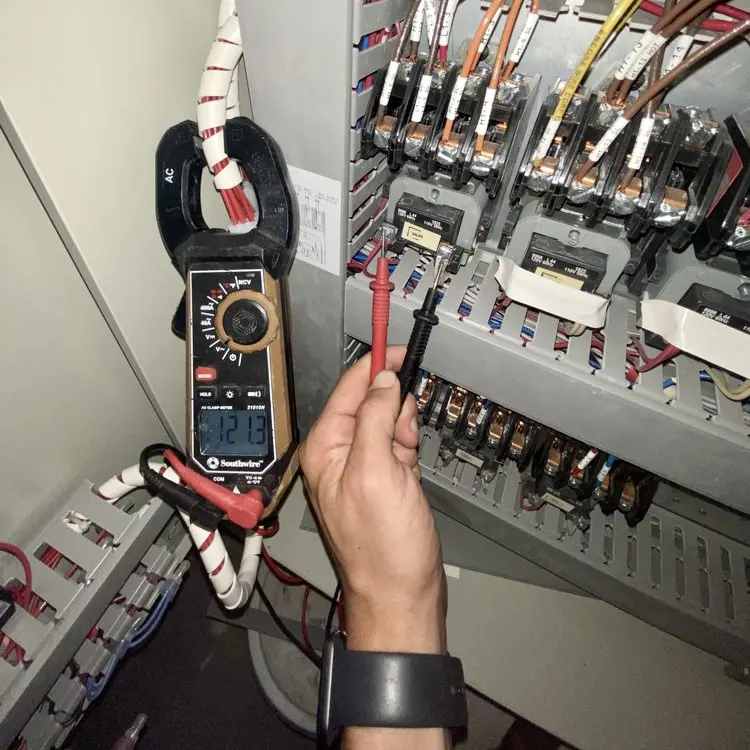
A qualified thermographer walks the building with a calibrated infrared camera while your equipment is running normally, panels, breakers, transformers, disconnects, bus ducts, anything carrying current. The camera reads surface temperature and builds a thermal image, so a connection that's heating up abnormally shows up as a bright spot against the surrounding components. It's a comparative technique. A tech isn't just looking for "hot," they're looking for a connection or component that's running noticeably hotter than an identical one right next to it doing the same job.
The equipment has to be energized and under real load for the scan to mean anything, which is part of why it's popular with facility managers. You get a meaningful safety and reliability check without scheduling a shutdown.
What the Scan Actually Finds
Most of what turns up on a thermal scan traces back to a handful of repeat offenders.
- Loose or corroded lugs and terminations, which are one of the most common causes of overheating and arcing faults
- Overloaded breakers or circuits carrying more current than they were sized for
- Imbalanced phases on three-phase equipment, which stresses motors and transformers over time
- Failing contactors and starters inside motor control centers before they seize or weld shut
- Deteriorating insulation or connections inside older switchgear and distribution equipment
Who Should Actually Be Doing This
This isn't really a residential service, but it's relevant to a wide range of commercial and industrial buildings around the Twin Cities. Manufacturing plants and warehouses running production equipment on aging distribution gear are the obvious case. So are multi-tenant office and retail buildings where nobody on site has looked inside the main switchgear in years. Restaurants and commercial kitchens with heavy equipment loads on older panels see their share of hot connections too. Data centers and the businesses that support them are another growing category. Minnesota now has roughlydata centers in operation or under development, and every one of them depends on distribution equipment that has to run without interruption.
If your facility has already had an arc flash risk assessment, an infrared scan is a natural next step. They cover different things. Arc flash studies calculate the energy a fault could release; thermography looks for the loose connections and overloaded components most likely to cause one.
What to Do With the Results
A good inspection report doesn't just hand you a stack of thermal photos. It should rate each finding by severity, note the temperature difference between the hot spot and a normal reference point, and give you a straight answer on what needs attention now versus what can go on a repair list for the next scheduled maintenance window. Anything flagged as an immediate safety risk, like a connection that's clearly overheating under load, should get looked at by a licensed electrician before it gets worse, not filed away for next quarter.
Most facilities that take this seriously fold infrared scanning into a broader preventative maintenance plan rather than treating it as a one-off. Annual scans are typical for most equipment, with tighter intervals for anything that's already shown a problem on a previous scan. It's a lot cheaper to replace a lug or a breaker on your own schedule than to replace a section of switchgear after it fails.
Frequently asked questions
Does an infrared electrical inspection require shutting down power?
No. The equipment needs to be energized and under normal operating load for the scan to be useful, so there's typically no shutdown or production downtime involved.
Is infrared thermography legally required for my business?
NFPA 70B is a consensus standard, not a law on its own, but insurers, corporate safety programs, and OSHA's general duty expectations increasingly point to it as the recognized benchmark for electrical maintenance, so many businesses treat it as effectively required.
How often should a facility get an infrared scan?
Most equipment in good condition is scanned about once a year, with more frequent checks for anything that showed a problem on a prior inspection or is considered higher risk.
What does an infrared inspection actually find?
It most commonly catches loose or corroded connections, overloaded circuits, imbalanced phases, and failing contactors or breakers, all of which generate excess heat before they ever cause a visible failure.
Can a thermal scan replace an arc flash risk assessment?
No, they serve different purposes. An arc flash study calculates the potential energy released in a fault, while a thermal scan looks for the loose connections and overheating components most likely to cause one in the first place.
Get Your Facility's Electrical System Scanned
Intech Corporation performs infrared electrical inspections for commercial and industrial facilities across the Twin Cities, backed by licensed electricians who can fix what the camera finds.
Schedule an Inspection →