
Intech Blog
Why Your AC Keeps Tripping the Breaker During Heat Waves
When your air conditioner trips the breaker on the hottest day of the summer, it's almost never bad luck. It's your panel telling you it can't comfortably handle everything you're asking it to run at once, and the breaker is doing exactly what it's supposed to do by shutting things off before a wire gets hot enough to cause real damage. One trip during a brutal heat wave might be nothing. A breaker that trips over and over, or a panel that feels warm to the touch, is a different conversation, and it's one worth having with a licensed electrician before the next 95-degree afternoon.
Minnesota's grid had a rough July. A sustained stretch of days abovedegrees pushed demand high enough that Xcel Energy declared five separate Energy Action Days during the month, asking customers to shift laundry, dishwashers, and other big loads out of thetop.m. window. Federal regulators went further: in late July, an emergency order directed the regional grid operator serving Minnesota, North Dakota, and South Dakota to tap backup generation as a last resort to avoid rolling blackouts, after hot weather drove air conditioning demand to the point where the system was stretched thin.
That kind of stress on the wider grid tends to show up at the household level too. Home cooling can account for roughly half of a typical summer electric bill in Xcel's service territory, and when a central AC unit runs nearly nonstop for days on end, any weak point in a home's wiring or panel gets tested harder than it would on a normal week. That's usually when a breaker that's been quietly marginal for years finally starts tripping.
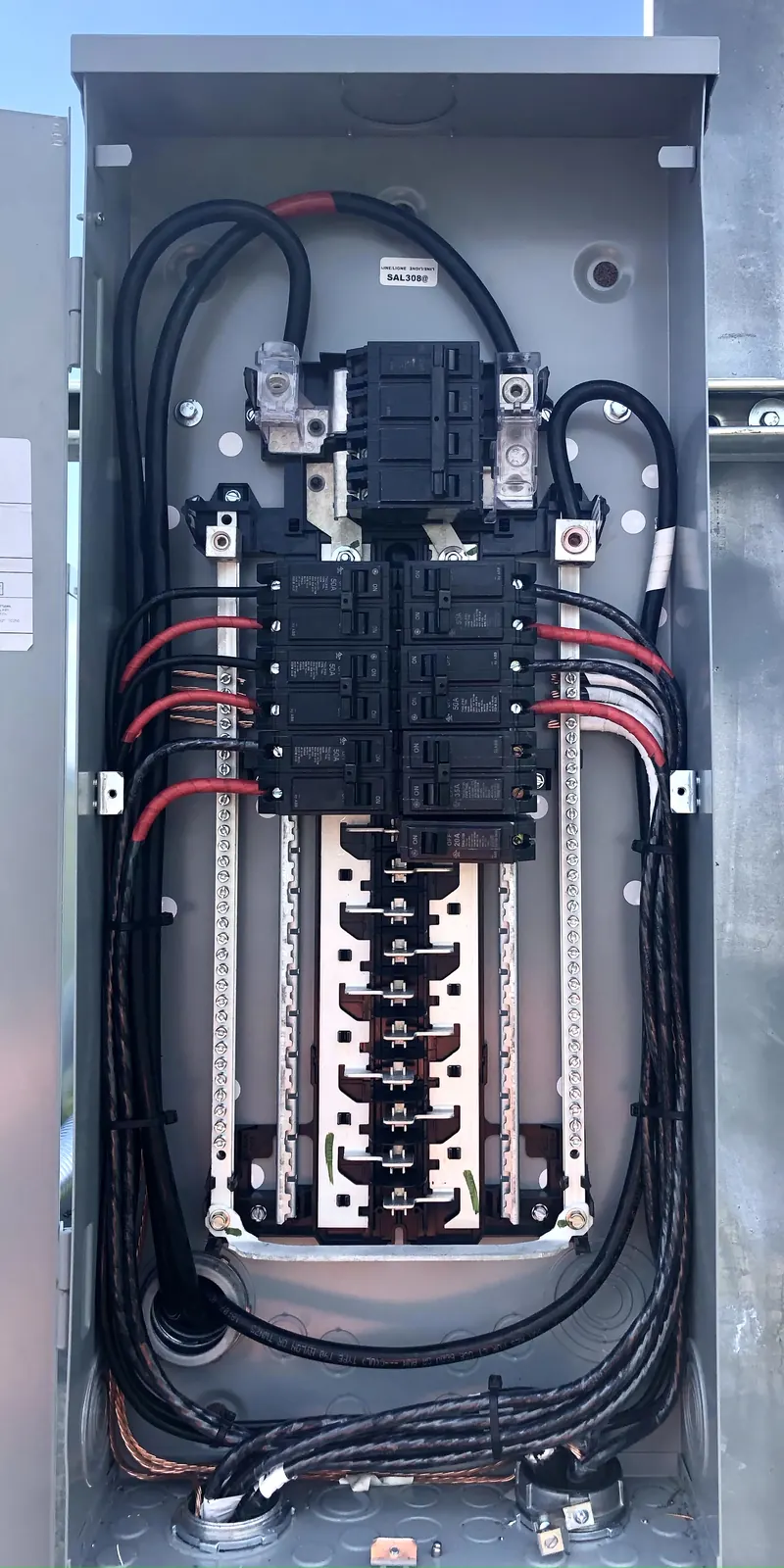
Why an AC unit trips a breaker specifically when it's hot out
Central air conditioners are motor-driven loads, and the compressor pulls a hard, brief surge of current every time it kicks on, something electricians call locked-rotor or inrush current. On a mild day the compressor cycles on and off and everything stays comfortably inside the circuit's rating. During a heat wave the compressor runs long and hard, sometimes almost continuously, and if the circuit is even a little marginal, that sustained load is what pushes it over the edge.
A handful of specific problems usually sit behind a repeat tripper: a breaker that doesn't match the compressor's nameplate rating, wiring that's a size too small for the load, a shared circuit that's also feeding other equipment, or a loose connection inside the panel that's heating up under current. Any one of these can look fine for years and only reveal itself once the AC is asked to run flat-out for several days in a row. An electrician's inspection is really the only reliable way to sort out which one you're dealing with, since a breaker that trips can be a mechanical HVAC issue or a wiring issue, and guessing wrong means the problem just comes back on the next hot day.
When a tripped breaker is a warning sign, not just an inconvenience
A single trip on the worst day of the summer isn't automatically a red flag. What matters is the pattern. Breakers tripping repeatedly, lights dimming across the house whenever the AC or another big appliance kicks on, or a panel that feels warm or gives off a faint hot-plastic smell are all signs that the panel or a circuit is being asked to do more than it's built for. None of those symptoms fix themselves, and none of them are safe to just live with through the rest of the season.
If you're noticing any of that, it's worth having someone take a real look rather than just resetting the breaker and hoping it holds. Our electrical troubleshooting team can pin down whether the fix is a targeted repair, like correcting a mismatched breaker or a loose lug, or whether the panel itself doesn't have the capacity for what your home is asking of it, in which case a panel upgrade is the more honest long-term answer.
Older panels and aluminum wiring don't like sustained heat
Homes with aging panels or aluminum branch wiring have an extra reason to be cautious in a heat wave. Aluminum wiring is prone to oxidizing at the point where it lands on breaker and neutral terminals, and that oxidation loosens the connection just enough to let it heat up under load. In a home with aluminum wiring, a warm panel deserves attention at exactly those terminations, because that's where trouble tends to start first.
This is also where age catches up with a house. A panel that's been running fine for twenty-plus years, on a service that was sized before central air and a garage full of electronics were part of daily life, can hit its limit the first time a heat wave forces the AC to run around the clock. If you've already had concerns about an older panel, particularly a Federal Pacific or Zinsco panel, a stretch of extreme heat is not the time to find out the hard way that it can't keep up.
Don't just keep resetting it
A breaker isn't a reset switch, it's a safety device. Every time you force a tripped breaker back on without figuring out why it tripped, you're rolling the dice on overheated wire insulation, damaged AC components, or worse. If the same breaker keeps tripping, that's your cue to stop loading that circuit and get it looked at rather than resetting it again and walking away.
National fire data has consistently shown that home electrical fires spike during the cold months when heating and lighting demand is highest, but a meaningful share still happen in the warm-weather months from May through July, when overloaded circuits and aging wiring get pushed hard by air conditioning. It's a smaller slice of the total, but it's not nothing, and it's entirely preventable with a timely inspection.
What to check before the next heat advisory hits
A few things are worth doing before the next stretch of 90-degree days rolls through the Twin Cities. Get a professional look at your panel if you've noticed any warning signs this summer, especially if your home is more thanyears old or you've added a heat pump, EV charger, or other major load since the AC was installed, since that combination is exactly what tends to expose a panel's capacity limits. A seasonal check as part of a preventative maintenance plan can catch a loose connection or an undersized breaker before it turns into a service call in the middle of a 95-degree afternoon.
- Note which breaker trips and what else is running on that circuit when it happens.
- Check the panel for warmth, a burning smell, or a buzzing sound, and call an electrician right away if you notice any of these.
- Avoid running the AC, an electric range, and a dryer all at once on an older service if breakers have been tripping.
- Ask about whether your AC's breaker and wiring actually match the compressor's nameplate rating, especially if the system is newer than the panel.
- If you're adding a heat pump or EV charger, get the panel evaluated for capacity before installation, not after.
Frequently asked questions
Is it safe to just reset the breaker and keep running the AC?
Resetting it once to see if it holds is fine, but if it trips again, stop and call an electrician. A breaker that keeps tripping is protecting you from an overheating wire, and forcing it back on repeatedly risks damaging equipment or starting a fire.
Why did my AC only start tripping the breaker this summer?
Long stretches of extreme heat make the compressor run harder and longer than it does in a normal summer, which exposes marginal wiring, loose connections, or a mismatched breaker that had been fine under lighter loads for years.
What does it mean if the panel feels warm to the touch?
A warm panel, a hot-plastic smell, or a buzzing sound are signs of a loose or overheating connection and should be treated as an active concern, not a nuisance. Get a licensed electrician out before running the AC again on that circuit.
Does central air need its own dedicated circuit?
Central air conditioning equipment is generally installed on its own dedicated circuit sized to the compressor's nameplate rating, since sharing the circuit with other loads increases the risk of nuisance tripping and overheating. A licensed electrician can confirm the correct sizing for your specific unit.
Could Xcel's Energy Action Day requests damage my electrical system?
No, those requests are just voluntary conservation asks to ease strain on the wider grid during peak hours. They don't affect your home's wiring directly, though a heat wave that pushes your AC to run nonstop can still expose weak points in your own panel.
When does a tripped breaker mean I need a panel upgrade instead of a repair?
If the issue is one loose connection or a single mismatched breaker, a targeted repair usually solves it. If your whole panel is maxed out or lacks room for your home's actual electrical demand, an upgrade is the more durable fix, and an electrician can tell you which situation you're in.
Breaker Keeps Tripping in the Heat? Let's Find Out Why.
Intech Corporation's electricians troubleshoot AC circuits and panel issues across the Twin Cities, so you're not gambling on the next heat advisory.
Schedule a Diagnostic Visit →