
Intech Blog
Federal Pacific or Zinsco Panel? Why Insurers Want It Gone
If your panel cover says Federal Pacific Electric, has breakers with a red stripe across the front, or says Zinsco or GTE Sylvania on it, you've got a documented fire risk on your wall, not just an old panel. These breakers have a well-documented history of failing to trip during an overload, and a growing number of homeowners insurance carriers are now non-renewing policies or refusing new coverage until the panel is replaced. The fix isn't a new breaker or a repair, it's a full panel upgrade.
These panels were everywhere from the 1950s through the early 1980s, and the Twin Cities has plenty of that housing stock, especially in the ring suburbs full of split-levels and rambler-style homes built during that stretch. A lot of homeowners have no idea what's behind their panel cover until a home inspector, an insurance underwriter, or an electrician doing a service call points it out.
This isn't a new problem, but it's become a more urgent one lately. Insurance underwriting has gotten sharper, some carriers now use aerial imagery and third-party inspections to flag risk factors from a distance, and panel brand is one of the things they're checking. If a letter shows up giving you a deadline to replace your panel or lose coverage, you're not the only one who's gotten one.
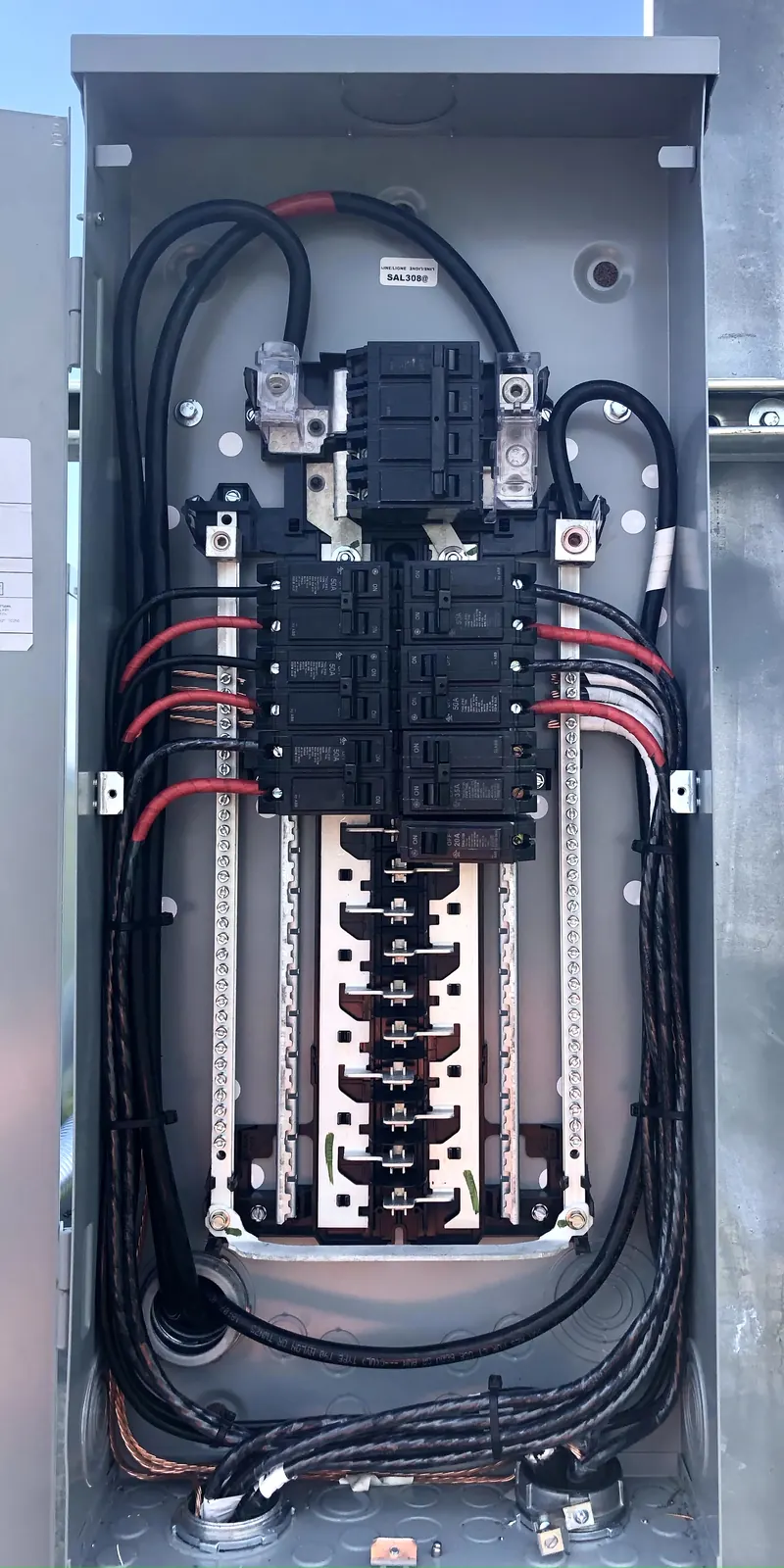
Why these panels are actually dangerous
A circuit breaker has one job: trip and cut power when a circuit pulls more current than it's rated for. That's what stops overheated wiring from becoming a fire. Federal Pacific's Stab-Lok breakers have a documented history of not doing that job reliably, staying closed and letting current keep flowing well past the point where a healthy breaker would have shut things down. Zinsco panels have a different but related problem: the breaker's connection to the bus bar can loosen and arc, generating heat that eventually fuses the breaker to the bus bar so it physically can't trip anymore, even if it wanted to.
Neither of these is a defect you can spot by looking at a panel that seems to be working fine. Breakers can look and behave normally right up until the moment they don't, which is exactly why waiting for a warning sign, like tripping, buzzing, or a warm panel cover, isn't a reliable safety strategy here.
How to tell what you've got, safely
You can check this yourself without touching anything inside the panel. Open the panel door (the outer cover, not the dead front) and look for a brand label, usually printed right on the door or the interior trim. Federal Pacific panels are typically labeled "Federal Pacific Electric" or "FPE," and the breakers themselves often have a red stripe running across the front. Zinsco panels are usually labeled Zinsco or GTE Sylvania, and the breakers tend to be brightly colored, blue, red, or green, rather than the plain black or gray you see on modern breakers.
If you see either of those brands, or you're just not sure what you're looking at, that's the point to stop and call a licensed electrician rather than start swapping breakers yourself. Aftermarket breakers for these old panels aren't UL-listed replacements for the originals, and the panel design itself, not just the breakers, is part of the problem.
Why your insurance company suddenly cares
Federal Pacific's Stab-Lok breakers were investigated by federal regulators and Underwriters Laboratories decades ago over their failure-to-trip record, and that history has never gone away, it's just gotten more attention from the insurance side recently. Homeowners across the country are reporting non-renewal notices, coverage declines on new policies, and premium surcharges specifically tied to having one of these panels identified during an inspection or underwriting review.
If you're buying or selling a home in the Twin Cities, this can also complicate the transaction. A home inspector who flags a Federal Pacific or Zinsco panel is going to note it in the report, and a lender or buyer's insurance company may require it resolved before closing. Getting ahead of it, rather than discovering it mid-sale, saves everyone a headache.
What replacement actually involves
There's no partial fix here. Replacing individual breakers doesn't solve the underlying design issue, and compatible replacement breakers for these obsolete panels aren't manufactured to current safety standards anyway. The real fix is pulling the old panel and installing a modern, UL-listed panel sized for how your home actually uses power today, not how it used power in 1975.
Costs vary based on your amperage, how much rework the wiring needs, and whether you're staying at your current service size or upgrading it. Most straightforward swaps land somewhere in the low thousands of dollars, with the number climbing if the job turns into a full service upgrade, say from 100 amps to 200, to handle a heat pump, an EV charger, or a growing electric kitchen. This work requires a permit and a final inspection in Minnesota, which is also part of what protects you, and your insurance claim, down the road if anything ever goes wrong.
It's also worth having the conversation about capacity while the panel's already open. A lot of these old 60- and 100-amp services were fine for a 1970s house and are genuinely tight for a modern one running central air, an electric range, and a car charger at the same time.
What to do if you find one
Don't panic, but don't ignore it either. If your panel is functioning normally right now, you likely have some time to plan the replacement properly rather than treat it as a same-day emergency, unless you're also seeing warning signs like frequent trips, a burning smell, buzzing, or a warm panel cover, in which case that's a call to make today, not this week.
If you've got an insurance letter with a deadline, or you're just tired of wondering what's behind that panel door, an electrician can confirm what you have and lay out real options rather than a scare pitch.
Frequently asked questions
Can I just replace the breakers instead of the whole panel?
No. The failure risk isn't limited to individual breakers, it's built into the panel and bus bar design itself, and UL-listed replacement breakers for these obsolete panel lines aren't made anymore. A full panel replacement is the accepted fix.
How do I know if my panel is Federal Pacific or Zinsco?
Open the outer panel door and look for a brand label, usually Federal Pacific Electric or FPE with red-striped breakers, or Zinsco or GTE Sylvania with brightly colored breakers. If you're unsure, a licensed electrician can identify it quickly.
Will my homeowners insurance really cancel my policy over this?
It's become increasingly common. Many carriers now flag these panel brands during underwriting or renewal reviews and will non-renew, decline new coverage, or raise premiums until the panel is replaced.
Is it safe to keep using a Federal Pacific panel until I can schedule replacement?
If it's showing no warning signs, most electricians will tell you it's not an emergency requiring same-day action, but it shouldn't sit indefinitely either. Any signs of trouble, tripping, buzzing, warmth, or a burning smell, mean stop using it and call an electrician right away.
Does replacing the panel also fix low-capacity issues, like not having enough power for an EV charger?
Often yes, since the replacement is a good time to size the new panel and service for your actual current and future loads rather than just matching the old amperage.
Not Sure What's Behind Your Panel Door?
Intech Corporation replaces Federal Pacific, Zinsco, and other outdated panels across the Twin Cities with modern, code-compliant equipment sized for how you actually live today.
Request a Quote →