
Intech Blog
Does Your Panel Have Room for an EV Charger or Heat Pump?
If you're adding an EV charger, a heat pump, or an induction range to a home built before the mid-1990s, there's a decent chance your 100-amp panel doesn't have the room for it. The fix is usually a panel upgrade to 200 amps, sometimes 400 amps if you're stacking multiple big loads, and it starts with a licensed electrician running an actual load calculation on your house rather than guessing.
This isn't a hypothetical problem. A lot of Twin Cities homes still have the 100-amp service that was standard decades ago, back when a house ran on a gas furnace, a gas water heater, and maybe a window AC unit. That panel was sized for that world. Now homeowners are adding a Level 2 <a>EV charger</a> that pulls 30 to 50 amps by itself, a cold-climate heat pump, an induction range, or all three at once, and the math stops working.
Minnesota's own electric cooperatives are watching demand climb statewide too. At the Minnesota Rural Electric Association's Energy Issues Summit in Bloomington this month, cooperative leaders spent two days on rising infrastructure costs and growing electricity demand across the state, alongside data center growth and grid reliability. Homes are part of that same trend, just on a smaller scale, one panel at a time.
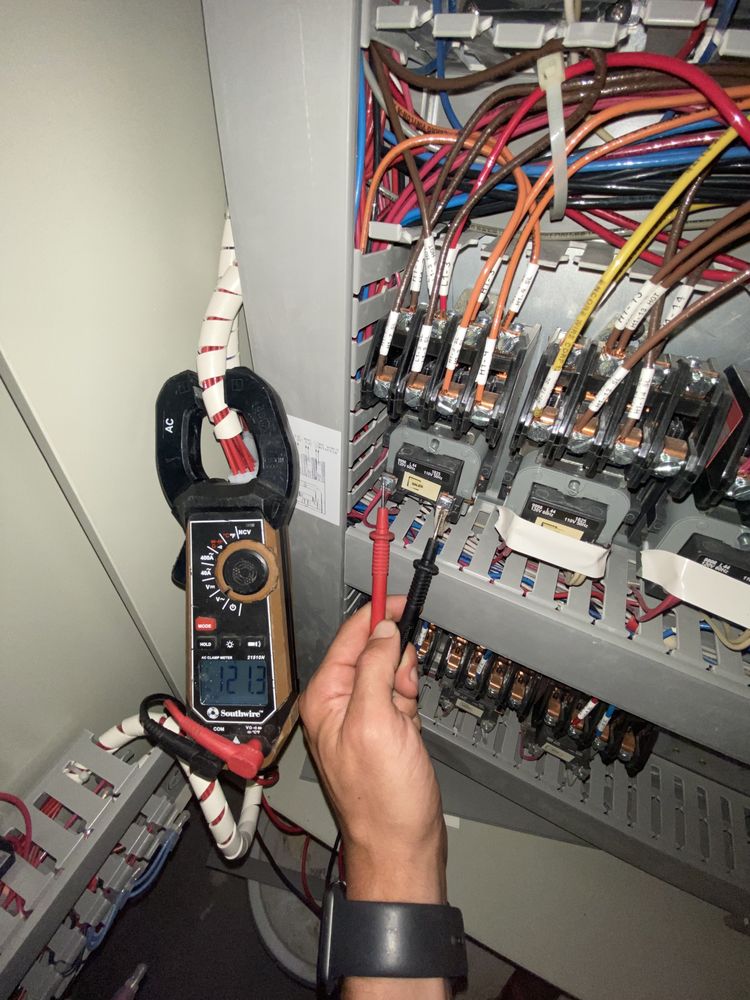
Signs Your Panel Is Already Maxed Out
You don't need to open your panel cover to get a decent read on this. A few warning signs tend to show up well before anything dangerous happens, and they're worth paying attention to before you sign a contract for a heat pump or an EV charger install.
- Breakers that trip regularly, especially when you run two big appliances at once
- No open slots left in the panel for a new circuit
- A panel made by Federal Pacific Electric (FPE Stab-Lok), Zinsco, or a similar brand with known, well-documented reliability problems
- A panel or breaker that feels warm to the touch or shows any scorch marks
- A major new load already planned: EV charger, heat pump, induction range, or hot tub
What a Load Calculation Actually Does
This is the part homeowners skip and shouldn't. Before your electrician recommends a bigger panel, they should run a load calculation, adding up your existing circuits and appliances against the new stuff you want to add, to see whether your current service can actually carry it or whether you're already close to the edge. It's not a guess and it's not a sales tactic. It's the number that determines whether a 100-amp panel can handle one new circuit with some room to spare, or whether you're looking at a full service upgrade.
A single new load, like just an EV charger, might squeeze onto an existing 100-amp panel with the right load management setup. Stack an EV charger, a heat pump, and an induction range together and you're almost always talking about a 200-amp panel as the practical baseline, with 400 amps becoming more common for homes trying to run everything electric. Our panel upgrades team runs this calculation as part of every quote, not as an upsell after the fact.
What It Costs, Roughly
Costs vary a lot by house, but the ranges people are seeing nationally give you a reasonable ballpark. A like-for-like 200-amp panel swap, no service change, typically runs somewhere in the $3,700 to $6,800 range. Going from 100 amps to a full 200-amp service, including a new mast and meter, tends to land between roughly $7,300 and $12,800. Pushing up to 400 amps for a heavily electrified home with EV charging, heat pump, and battery storage can run $8,200 to $14,900 or more depending on what the utility connection requires.
Adding a sub-panel instead of replacing the whole service is sometimes the right call for a single new circuit, and that's a cheaper project, generally a few thousand dollars rather than a full service upgrade. Your electrician should be able to tell you fairly quickly, once they've looked at your existing panel and run the numbers, which category your house falls into.
Rebates and Tax Credits: What's Real Right Now
There's a lot of noise online about panel upgrade rebates, and a fair amount of it is outdated. The federal 25C energy efficiency tax credit that used to help offset panel and heat pump costs expired at the end of 2025, so it's no longer available for new projects. Minnesota's own Save Energy Minnesota program, which would combine federal HEAR and HOMES rebates with state funding for electrical panel upgrades and heat pumps, has been announced but has not launched as of the state's most recent update, and there's no confirmed launch date yet.
What is still available are utility-run conservation rebates through providers like Xcel Energy and CenterPoint Energy, which don't depend on the stalled federal rollout. If you're planning a project around a rebate that hasn't launched yet, don't do the work early expecting it to qualify retroactively. It won't.
Do the Panel First
If you're planning more than one electrification project, whether that's an EV charger this year and a heat pump next year, get the panel assessed before you commit to either one separately. It's a lot cheaper to size a panel correctly once than to upgrade it twice because the first contractor only planned for the job in front of them. This is also the moment to think about backup power. If you're already opening up the service, adding a transfer switch for a standby generator is a much smaller incremental cost than doing it as its own project later, especially with outages becoming more common during Minnesota storms and heat waves.
Frequently asked questions
Do I need a 200-amp panel just to add an EV charger?
Not necessarily. A single Level 2 charger can sometimes work on a 100-amp panel with load management, but it depends on what else is already running on that panel. A load calculation from an electrician will tell you for sure.
How do I know if my panel is a Federal Pacific or Zinsco panel?
Look at the brand name printed on the panel door or the main breaker itself, or have an electrician check it during a service visit. Both brands have well-documented reliability problems and are generally recommended for replacement regardless of any new electrical loads.
Is the federal tax credit for panel upgrades still available?
No. The federal 25C tax credit expired at the end of 2025 and is not available for projects installed in 2026.
Is Minnesota's state rebate for panel upgrades available yet?
Not as of this writing. Minnesota's Save Energy Minnesota program, which would cover panel upgrades and heat pumps, has been announced but has not launched, and the state has not given an estimated launch date.
How long does a panel upgrade take?
A straightforward panel swap is often a one-day job, though a full service upgrade involving the utility meter and mast can take longer depending on permit timing and utility scheduling.
Can I just add a sub-panel instead of upgrading my whole service?
Sometimes, yes, especially if you're only adding one new circuit and your existing service still has capacity. An electrician can tell you which option makes sense once they've assessed your panel and run the load numbers.
Planning an EV Charger, Heat Pump, or Induction Range?
Get your panel assessed before you commit to any electrification project. We'll run the load calculation, tell you straight whether you need an upgrade, and quote it clearly.
Request a Quote →