
Intech Blog
Home Battery Backup in Minnesota: Worth It as Grid Strain Grows?
A home battery system stores electricity so a handful of circuits in your house, your fridge, sump pump, furnace blower, some outlets, keep running when the grid goes down, and it can also shave your bill by discharging during expensive peak hours. It won't run your whole house indefinitely the way a generator will, but paired correctly with your panel and, in most cases, solar, it's become a real option for Twin Cities homeowners who watched this summer's grid warnings and decided they didn't want to find out the hard way what happens next.
This isn't a hypothetical. Back in February, the Minnesota Rural Electric Association highlighted a new reliability assessment from the North American Electric Reliability Corporation warning that the grid region covering Minnesota faces elevated reliability risks as electricity demand grows and existing power plants retire. That warning stopped being theoretical in mid-July, when a long-duration heat dome pushed temperatures into the 90s across nearly the entire state for over a week, and the regional grid operator declared a maximum generation emergency as demand across its footprint hitgigawatts. A few weeks later, a federal emergency order let a neighboring grid operator tap backup generation to keep power flowing across Minnesota, North Dakota, and South Dakota, an order that authorized backup generation as a last resort before the kind of alert that leads to rolling blackouts.
None of that means the lights are about to go out at your house tomorrow. But it's the kind of year that gets homeowners thinking seriously about backup power, and a growing number are looking past a standby generator alone toward battery storage, either on its own or paired with solar. Add in Minnesota's new time-of-use rate structure and rising demand from data centers, and a battery starts looking less like a novelty and more like a practical tool.
What a home battery actually does
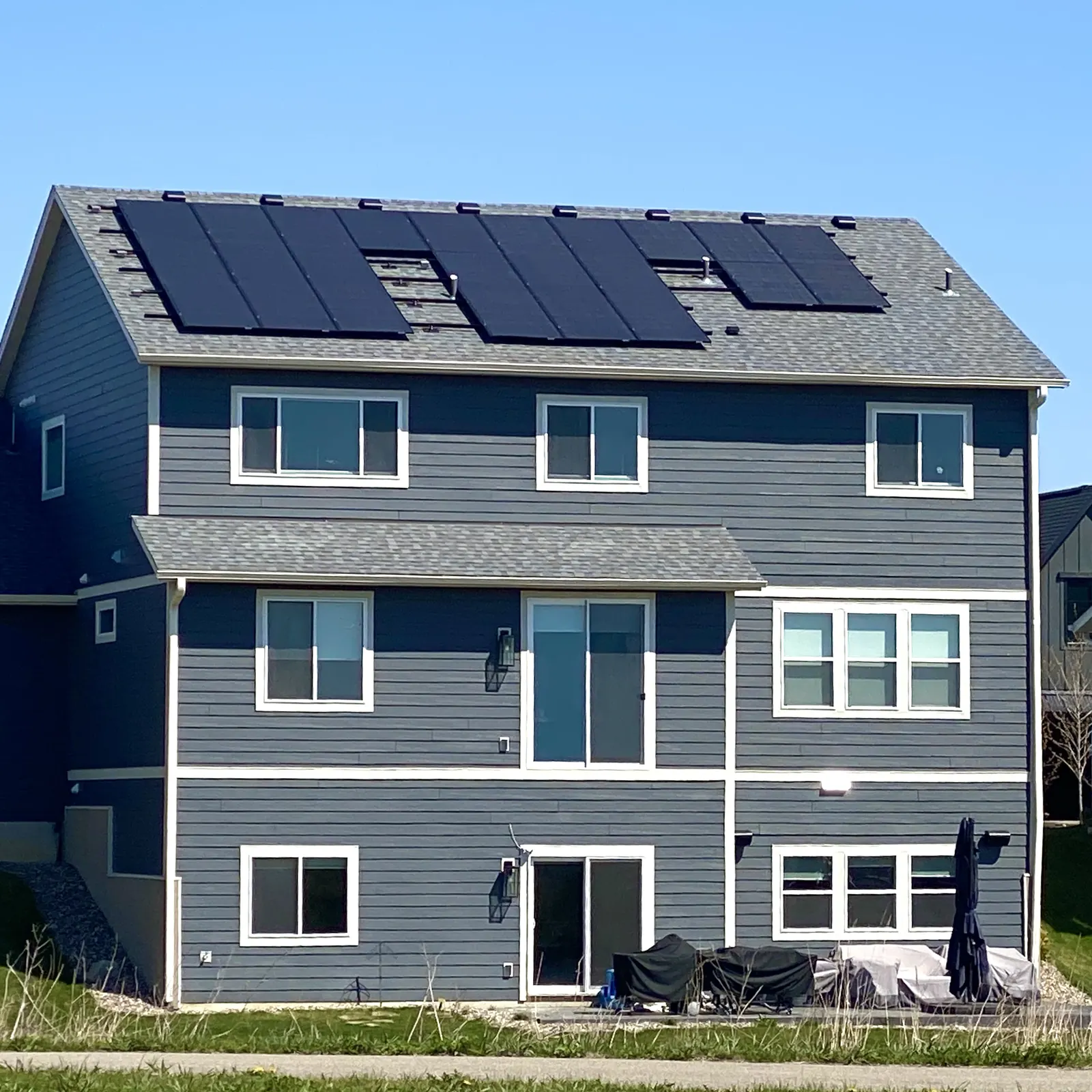
A home battery, think Tesla Powerwall, Enphase, or similar, stores energy pulled from the grid or from a rooftop solar array and releases it back through your electrical panel when needed. During an outage, an automatic transfer switch isolates your home from the grid and lets the battery feed a set of circuits you've chosen ahead of time. During normal operation, it can also discharge during high-price hours to cut your bill, which matters more now that Xcel has rolled out time-of-use pricing.
The key word is "chosen circuits." Most residential batteries in thetokWh range aren't sized to run an entire Minnesota house, especially not central air or electric heat, for very long. They're built to carry critical loads: refrigerator, sump pump, some lighting and outlets, maybe a furnace blower. That's a very different job than a whole-house generator, and it's worth being honest about that distinction before you spend the money.
Battery versus generator: they solve different problems
A standby generator burns fuel and can carry a home indefinitely as long as it has propane or natural gas supply, which makes it the better choice for a multi-day ice storm outage in January. A battery is silent, doesn't need fuel deliveries, and kicks in instantly with zero start-up delay, but it's limited by its stored capacity, usually somewhere between several hours and a day or two of critical loads, less if it's cold and your furnace is drawing more power to keep up.
A battery paired with solar can recharge during daylight even mid-outage, which changes the math for extended events. Plenty of Twin Cities homeowners end up running both: a generator for the long haul, a battery for the quiet, instant backup on shorter outages and for shaving peak-rate charges the rest of the year.
What it costs in Minnesota right now, and the rebates that still apply
A residential battery installation typically runs somewhere in the ten to twenty thousand dollar range installed, depending on capacity and whether it's paired with a new solar system. The federal picture changed for 2026: thepercent Residential Clean Energy Credit under Section 25D, which used to apply to batteries and solar bought outright by homeowners, ended for any system placed in service after December 31, 2025. If you're financing through a solar lease or power purchase agreement, a separate business-side credit may still apply, but for a system you own outright, that federal credit is gone.
State and utility rebates are still very much alive, though, and they're worth chasing. If you're an Xcel Energy customer, the utility's Battery Storage Incentive Program pays an upfront incentive of $175 per kWh of capacity, capped at $5,000, or $370 per kWh for income-qualified customers. If you're outside Xcel territory, the Minnesota Department of Commerce runs a parallel program paying $250 per kWh up to $7,000, or $1,000 per kWh up to $15,000 for income-qualified applicants. Both programs require the battery to be new and charged by an on-site solar system, a battery installed without solar doesn't qualify for either rebate, and both are funded on a first-come, first-served basis with a limited pool of money, so it pays to apply early rather than wait.
Panel capacity and permitting matter more than the battery itself
Adding a battery, especially one paired with solar, means new load calculations, a transfer switch, dedicated circuits for whatever you're backing up, and in most cases a utility interconnection application separate from your city permit. Plenty of older Twin Cities panels don't have the room or the configuration to add this cleanly, which is one more reason a panel upgrade often comes up in the same conversation as battery storage. This is not a project to piece together yourself or hire out to whoever's cheapest; a botched interconnection can trip utility safety reviews, void your rebate, or create a genuine fire hazard behind the wall. It needs a licensed electrician who pulls the permit, coordinates with your utility, and signs off on the inspection.
Is it worth it for your house
If you've already got solar, or you're planning to add it, pairing in a battery is an easier call, you get the rebate eligibility, resilience during an outage, and a way to use your own generation after sunset. If you don't have solar and don't want it, a battery-only system still works for backup, it just won't qualify for the state or Xcel incentives, so the payback math is longer. If your main worry is a multi-day outage from an ice storm, a generator still does that job better and cheaper per hour of runtime. If your main worry is a shorter outage, quieter operation, or managing new time-of-use rates, a battery earns its keep faster.
Frequently asked questions
How long will a home battery power my house during an outage?
It depends on capacity and what you've wired to it, but most residential batteries backing up critical circuits like a fridge, sump pump, and some outlets last anywhere from several hours to a day or two, not indefinitely like a fuel-fed generator.
Do I need solar panels to install a home battery in Minnesota?
No, a battery can be installed on its own for backup power, but the current Xcel Energy and Minnesota Department of Commerce rebates both require the battery to be charged by an on-site solar system, so a battery-only install won't qualify for either incentive.
Is there still a federal tax credit for home batteries in 2026?
Not for homeowners who buy a system outright. The 30 percent federal Residential Clean Energy Credit ended for systems placed in service after December 31, 2025, though a separate credit may still apply to leased or third-party-owned systems.
How much does Xcel Energy pay for battery storage right now?
Xcel's current program pays an upfront incentive of $175 per kWh of battery capacity, capped at $5,000, or $370 per kWh for income-qualified customers, as long as the battery is paired with solar.
Should I get a battery, a generator, or both?
A generator is the better tool for a long multi-day outage since it runs on fuel rather than stored charge, while a battery gives you instant, silent backup for shorter outages and can also cut your bill under time-of-use rates; many homeowners end up choosing both.
Thinking About Battery Backup or Solar Storage?
Intech can walk through whether your panel is ready, what rebates you qualify for, and whether a battery, generator, or both makes sense for your home.
Get a Quote →