
Intech Blog
Adding a Heat Pump in Minnesota? Check Your Panel First
A cold-climate heat pump doesn't ask for anything exotic from your electrical system, but it does need a dedicated 240-volt circuit with its own double-pole breaker, and it needs your main panel to have real capacity left over after everything else in the house is accounted for. In a lot of Twin Cities homes built before the early 2000s, that leftover capacity is the whole question. If your panel is already running atamps and crowded with a range, a dryer, a water heater, and maybe an EV charger, adding a heat pump means a proper load calculation first, and possibly a panel upgrade before the HVAC crew ever shows up on install day.
Heat pumps have gone from a niche pitch to the thing every HVAC contractor in the metro is pushing this year, and for good reason. Cold-climate models built for the last decade actually hold up in a Minnesota winter, and with the federal tax credit for heat pumps gone as of the start of 2026, utility rebates and equipment efficiency are doing more of the heavy lifting on cost. What doesn't get talked about enough is the electrical side. We get calls every fall from homeowners who bought a heat pump, scheduled the install, and then found out mid-project that their 100-amp service can't absorb one more 240-volt appliance without tripping the main breaker or failing an inspection.
That's not a scare tactic, it's just how electricity works. Every circuit you add pulls from a fixed total, and a heat pump's compressor is one of the bigger single draws you'll ever put on a residential panel.
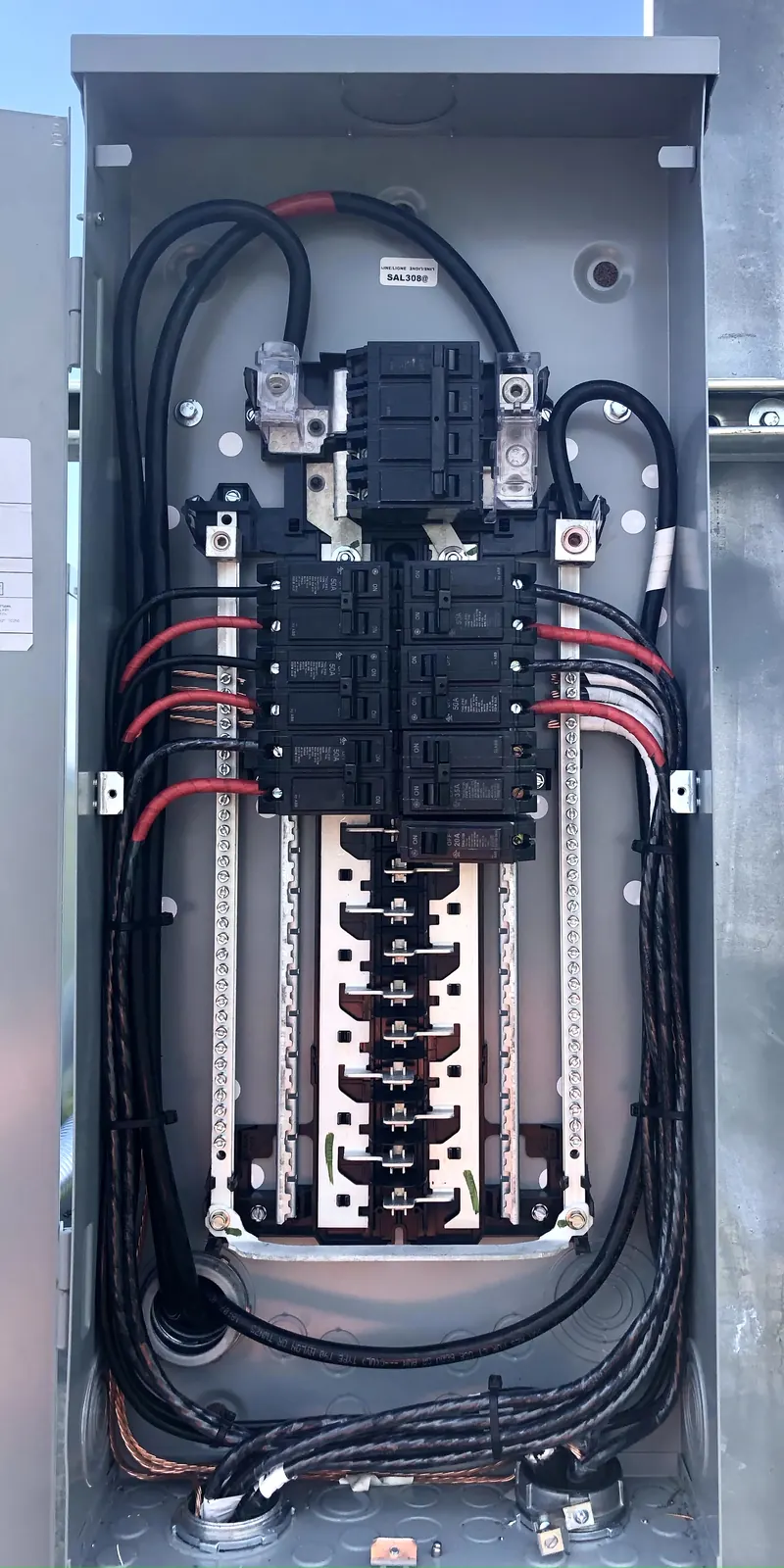
What a heat pump actually asks of your panel
A residential air-source heat pump runs on its own dedicated 240-volt circuit, separate from anything else in the house. The compressor typically needs atoamp double-pole breaker depending on the size of the unit, and that breaker takes up two slots in your panel, not one. If you're also adding electric backup heat strips for the coldest stretches, that's a second dedicated circuit on top of the compressor circuit. None of this is unusual for HVAC equipment, but it adds up fast if your panel is already tight.
How to know if you've got room
You can do a rough gut-check yourself without opening anything up. Look at the number stamped on your main breaker, that's your total service size, usually 100, 150, oramps. Then count how many open slots are left in the panel, keeping in mind the heat pump needs two side by side. If you've got a 200-amp panel with several open slots, you're probably fine. If you're onamps and the panel is already full of tandem breakers, a conversation about upgrading is coming.
That said, an eyeball check isn't the same as a real answer. The only way to know for sure is a load calculation, where an electrician totals up everything your home can pull at once, applies the standard demand factors, and compares it against your service size. It's a fast, non-invasive assessment, and it's the right first step before you commit to equipment. This is also where we tell homeowners plainly: don't go inside the panel yourself to check wire gauges or breaker ratings beyond reading the label. That's energized equipment, and it's exactly the kind of job to hand to a licensed electrician instead.
Minnesota winters change the math
Cold-climate heat pumps are engineered to keep producing heat well below zero, which is why they're the only kind worth installing here. But even the best units lose efficiency as the temperature drops, and most Minnesota installs still pair the heat pump with a backup source, usually the existing gas furnace, for the handful of nights each winter when it's genuinely brutal outside. That dual-fuel setup doesn't change the electrical requirements much on its own, but it's worth knowing going in so nobody's surprised when the furnace kicks on during a cold snap. It's also a reason to get the electrical side and the HVAC side talking to each other early, rather than discovering a mismatch after the equipment is already on order.
What's actually paying for this right now
The federal tax credit that used to coverpercent of a heat pump's cost, capped at $2,000, ended for good on any system installed starting in 2026, thanks to the tax law Congress passed in mid-2025. So if you're shopping now, that particular incentive is off the table. What's still live are utility rebates. Xcel Energy currently offers up to $2,000 for a qualifying cold-climate heat pump, with an added bonus if you pair it with insulation and air sealing work, and Xcel's own program materials note there's a rebate available toward the electrical panel work itself when a panel upgrade is needed to support the new equipment. CenterPoint Energy and other Minnesota utilities and co-ops have their own dual-fuel and heat pump rebates as well, and terms vary by provider, so it's worth checking your specific utility before you sign a contract.
There's also a state-level piece still in limbo. Minnesota's legislature approved funding back infor a Residential Heat Pump Rebate and a Residential Electrical Panel Upgrade grant, designed to stack on top of federal rebates. As of the state's most recent public update, those programs, along with the related federal HOMES and HEAR rebates, still haven't launched. Minnesota is waiting on formal approval from the U.S. Department of Energy, and there's no estimated launch date yet. If you're not in a hurry and want to see whether that money materializes, it's a reasonable thing to keep an eye on. If your furnace or panel can't wait, the utility rebates available today are real and worth using.
The load doesn't stop at the heat pump
A heat pump rarely shows up alone anymore. We're seeing more homeowners add one alongside an EV charger and an induction range, all pulling from the sameor 150-amp panel that was sized decades ago for a house with a gas furnace and a couple of window units. Stack those loads together and even a healthy panel can run out of room fast. If you're also on one of the newer time-of-use electricity rate plans, it's worth thinking through how a heat pump running through a cold afternoon interacts with your rate schedule, since heating load and peak pricing windows don't always line up in your favor.
How Intech handles this
We do the electrical side of heat pump projects for homeowners and HVAC contractors across the Twin Cities. That starts with a load calculation on your existing panel, an honest answer about whether you need an upgrade or just a new circuit, and if an upgrade is needed, a clear quote before any equipment gets ordered. We coordinate directly with your HVAC installer so the electrical work and the mechanical install line up on the same timeline instead of stalling each other out.
Frequently asked questions
Do I need a panel upgrade to install a heat pump in Minnesota?
Not always. Homes with a 200-amp panel and open breaker slots usually have enough capacity, but older homes on 100-amp service that are already loaded up with other 240-volt appliances often need an upgrade. A load calculation from an electrician gives you a definite answer.
What size breaker does a residential heat pump need?
Most residential heat pump compressors run on a 30 to 40 amp double-pole breaker, depending on the size of the unit, and that takes two slots in your panel rather than one.
Are there still rebates for heat pumps in Minnesota?
Yes, but the federal tax credit expired for anything installed starting in 2026. Utility rebates from Xcel Energy, CenterPoint, and other Minnesota providers are still active, and a state rebate program approved in 2023 has not yet launched as of this posting.
Can I check my own panel capacity before calling an electrician?
You can safely check the amperage number on your main breaker and count open slots as a rough starting point, but don't open up the panel further than that. A proper load calculation is the only reliable way to confirm you have enough capacity.
Does a heat pump need backup heat in Minnesota?
Most installations here pair a cold-climate heat pump with an existing furnace as backup heat for the coldest stretches of winter, since efficiency drops as outdoor temperatures fall well below zero.
Planning a Heat Pump? Let's Check Your Panel First
Get a straight answer on whether your electrical panel can handle a new heat pump, and a clear quote if it can't.
Request a Quote →