
Intech Blog
Storm Season Power Surges: Does Your Twin Cities Home Need Protection?
Yes, if you live anywhere in the Twin Cities metro, a whole-home surge protector is worth installing, and current electrical code actually requires one anytime a service panel is replaced. Storm-driven outages don't just cut your power, they send voltage spikes through your wiring when the grid reconnects, and that's what actually kills furnace boards, refrigerators, and home electronics. A properly installed surge protective device, or SPD, runs most homeowners $300 to $700 installed and gets wired directly into your panel.
It's been a rough stretch of weather. Straight-line winds gusting over 100 mph tore through western Minnesota and the Dakotas this summer, and central Minnesota took another hit in early July when a suspected tornado touched down near Detroit Lakes and snapped power poles across the region. Xcel Energy carried the largest share of the more than 7,000 outages reported statewide that week. The west metro got hit too, with tornado touchdowns that tossed pontoons and knocked out power to thousands of households.
Every one of those events follows the same pattern: the lights go out, crews scramble to restore service, and somewhere in that restoration process there's a jolt. That jolt is a power surge, and it's a lot more damaging than most homeowners realize. If your neighborhood has been in and out of power more than once this summer, it might be time to think past the outage itself and look at what's protecting your wiring and appliances when the power comes back.
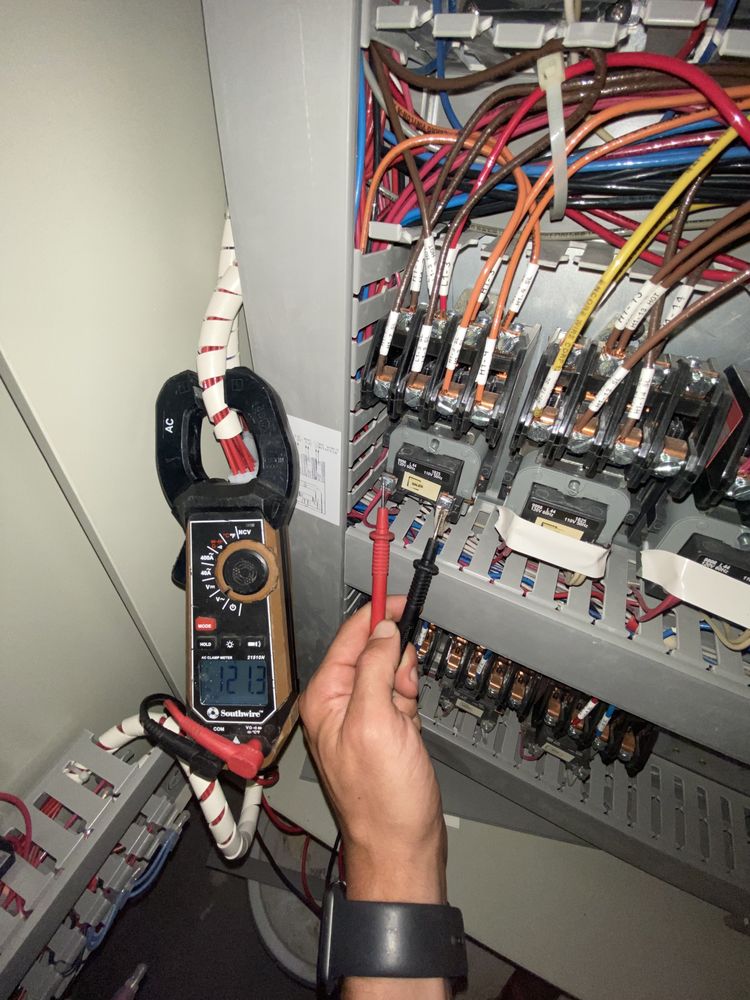
Storms Cause More Surges Than Lightning Does
People picture a direct lightning strike when they hear "power surge," but that's actually the rare case. Most surge damage during storm season comes from grid switching, downed lines being reconnected, and transformers cycling as utility crews restore power to different sections of a circuit. Each time the grid comes back online, there can be a brief overvoltage event that lasts only a few milliseconds but is strong enough to degrade or destroy circuit boards in HVAC systems, refrigerators, and anything else plugged in at the time.
It's cumulative, too. A furnace control board that survives three small surges might fail on the fourth. That's why some homeowners deal with mysterious appliance failures for years without ever connecting the dots back to their storm-prone summer.
What a Whole-Home Surge Protector Actually Does
A whole-home surge protective device gets installed directly in or right next to your breaker panel and intercepts voltage spikes before they reach your branch circuits. Since the 2020 National Electrical Code, Section 230.67 has required a Type 1 or Type 2 SPD on any service supplying a dwelling unit, and that requirement applies whether you're building new or simply replacing existing service equipment. Minnesota's updated code carries that same requirement forward.
Type 1 devices install on the utility side of your main breaker, while Type 2 units mount in or beside the panel on the load side. Either one protects the whole house, but a $20 power strip at your desk only protects what's plugged into it, and even then only from smaller surges. If you're already having panel upgrade work done, adding an SPD at the same time keeps labor costs low since the panel is already open.
- Typical installed cost: $300 to $700 for the unit and labor
- Cheapest to add during a panel upgrade or service replacement
- Protects HVAC boards, appliances, and anything hardwired, not just what's plugged into an outlet
- Doesn't replace point-of-use protection for sensitive electronics like computers and TVs
If You See a Downed Line, Here's What to Do
With the tree damage we've seen this year, downed lines are a real possibility after any bad storm. Always assume a line on the ground is energized, even if it's not sparking or moving. Stay back at least 50 feet from the line and anything it's touching, including fences, trees, or standing water, and call 911 along with your utility right away. If you absolutely need to move away from a line that's closer than that, shuffle with small steps and keep your feet together rather than taking normal strides or running.
Never try to move a downed line yourself, even with a wooden broom handle. Wood conducts electricity once it's even slightly wet, and after a Minnesota thunderstorm, everything outside is wet.
What to Check When the Power Comes Back On
Once your lights are back, do a quick visual check of your breaker panel for anything tripped, and reset a tripped breaker once. If it trips again immediately, stop and call for service rather than resetting it repeatedly. Unplug sensitive electronics like computers, TVs, and game consoles during active storms if you get any warning at all, since that removes them from the circuit entirely during the riskiest window. If you've had repeat outages this season and you're noticing appliances acting glitchy afterward, that's worth mentioning when you schedule an inspection.
Backup Power Is the Other Half of Storm Season
A surge protector keeps the grid from damaging your home. It doesn't keep the lights on when the grid goes down for six or twelve hours, which is what a lot of Twin Cities households dealt with this summer. A properly sized standby generator picks up automatically within seconds of an outage and can carry your furnace, sump pump, refrigerator, and other essentials until Xcel or your co-op gets the lines back up. We've covered the grid strain side of this in more detail in our piece on why the power keeps going out during heat waves, but storm outages tend to be shorter and more violent, which changes what kind of backup makes sense.
Frequently asked questions
Is a whole-home surge protector required by code in Minnesota?
Yes, current electrical code requires a Type 1 or Type 2 surge protective device any time a home's electrical service is newly installed or replaced, and Minnesota's adopted code follows that same rule.
How much does a whole-home surge protector cost installed?
Most homeowners pay $300 to $700 for the device and installation labor, with lower labor costs if it's added during a panel upgrade that's already underway.
Will a power strip protect my whole house from a surge?
No, a plug-in power strip only protects the specific device it's connected to, and only from smaller surges. It does nothing for your HVAC system, water heater, or anything hardwired into the house.
How far away should I stay from a downed power line?
Stay at least 50 feet away from any downed line and anything it's touching, treat every line as energized, and call 911 and your utility immediately rather than approaching it.
Does a generator protect my house from power surges too?
Not directly. A generator keeps your essential circuits running during an outage, but a surge protective device is still what guards your wiring and appliances against voltage spikes when utility power is restored.
Protect Your Home Before the Next Storm Rolls Through
Intech Corporation installs whole-home surge protection, panel upgrades, and standby generators across the Twin Cities. Get ahead of storm season instead of cleaning up after it.
Get a Quote →